Teaching a Martinez bird to talk is absolutely doable, but the first thing to do is confirm exactly what bird you're working with. In the Philippines, 'Martinez' is the common local name for the crested myna (Acridotheres cristatellus), a corvid-related starling relative that is documented to mimic human voices and yard birds. If your bird goes by 'Martinez' as a pet name rather than a species nickname, or if you have a related myna species, the core training steps still apply, but your timeline and expectations will shift based on the individual bird's species and age. Take a moment to confirm which bird you have, then read on, because the method below is built to work for you either way.
How to Teach a Martinez Bird to Talk Step by Step
Maya Harris
22 Mar 2026
Quick reality check: what to expect from a talking Martinez bird
Crested mynas and their close relatives like the common hill myna (Gracula religiosa) are among the most capable vocal mimics in the bird world. Britannica notes that the hill myna learns to imitate human speech far better than even the African grey parrot, which is widely considered the gold standard among parrots. That is a meaningful benchmark. The crested myna, while slightly less talked-about, shares that mimicry lineage and has documented cases of copying human voices.
That said, 'talking' for a myna means mimicry, not comprehension. Your bird is not learning what words mean; it is learning to reproduce sounds it hears repeatedly in a positive context. Some individual birds are naturally chatty and pick up words within a few weeks. Others take months of consistent work and may never produce crisp speech, settling instead for partial sounds or tonal imitations. Age matters too: younger birds, ideally under one year old, learn fastest. An older bird can still learn, but it will likely take longer and require more patience.
- Realistic first-word timeline: 2 to 8 weeks of daily sessions for a young, socialized bird
- Realistic timeline for an older or less-socialized bird: 2 to 6 months, sometimes more
- Not every bird will talk clearly; some produce recognizable approximations rather than clean words
- Mimicry is not language: your bird is pattern-matching sounds, not understanding meaning
- Species confirmation matters: crested myna vs. hill myna vs. a pet with 'Martinez' as a name each has different baseline ability
Set up for success: cage, space, and daily bonding
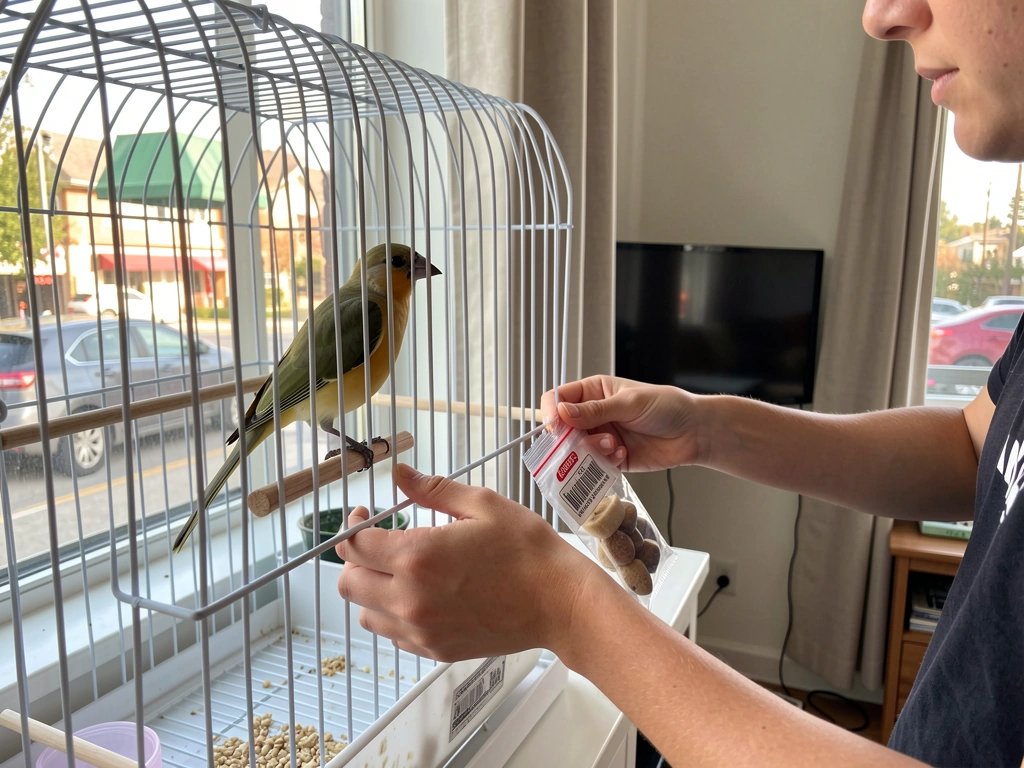
Before any training session happens, the environment needs to support learning. A bird that is stressed, isolated, or stuck in a chaotic space will not focus. Place the cage in a room where the bird regularly sees and hears you going about your day. This passive exposure to your voice is actually the foundation of talking training, because the bird begins to recognize your voice patterns long before formal sessions start.
Keep the cage away from constant loud distractions like a TV running at high volume or a busy street window. Background noise competes with the sounds you want the bird to mimic. A calm, moderately stimulating environment, where the bird can see household activity but is not overwhelmed, is ideal. Make sure the bird has a safe, comfortable perch at roughly eye level when you sit or stand near the cage. Eye-level contact during sessions builds trust and keeps the bird engaged with you rather than looking away.
Bonding is not optional prep, it is the actual engine of talking training. Birds mimic sounds they associate with positive experiences and social connection. Spend time near your bird every day, talking casually to it, offering treats by hand, and simply being present. If your bird is still nervous around you, work on handling and trust first before pushing speech training. A fearful bird will not learn well, and pushing training when a bird is anxious can set you back significantly.
Choosing your target phrases and sounds
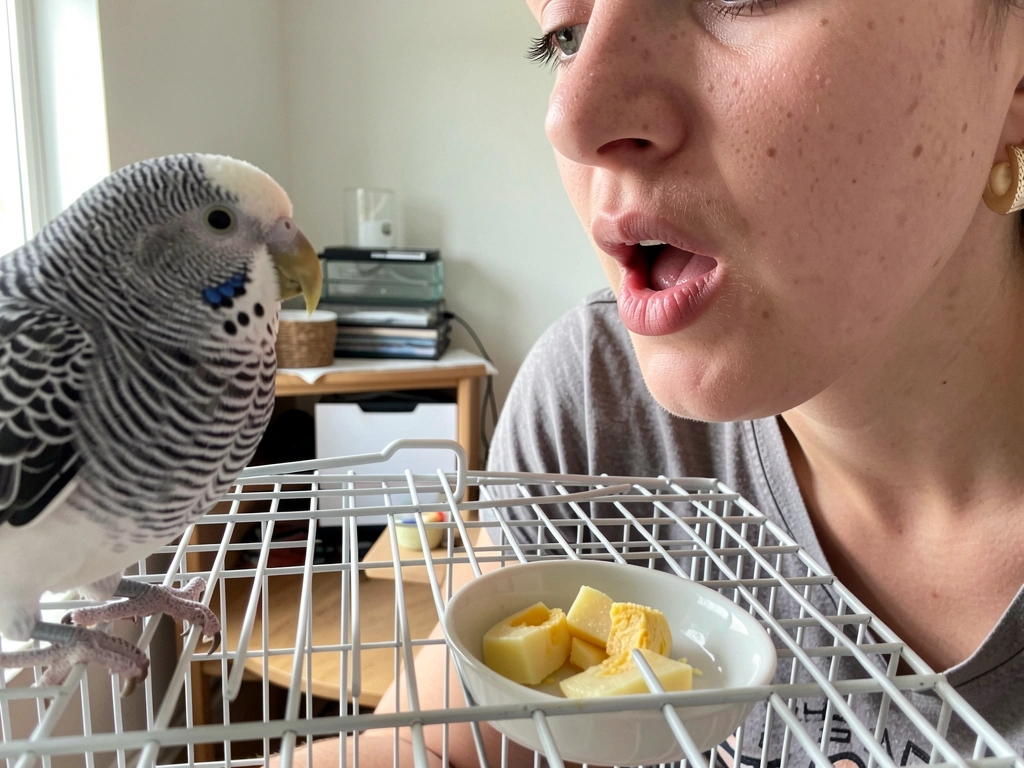
Pick two to three short phrases to start with and stick to them exclusively for the first several weeks. Short, high-pitched words with clear vowel sounds are easiest for mynas to reproduce. Think one or two syllables: the bird's name, 'hello,' 'good bird,' or a short phrase you say every time you enter the room. Avoid starting with long sentences or multiple different phrases, because that scatters the bird's learning and slows progress.
Context-pair each phrase from day one. That means saying the same word or phrase in the same situation every time. Say 'hello' every time you walk up to the cage. Say 'good bird' every time you give a treat. Say the bird's name every time you make eye contact. This repetition inside a consistent context dramatically speeds up the mimicry process, because the bird starts to associate the sound pattern with a specific cue rather than hearing it in random isolation.
- Start with 2 to 3 short phrases only; add more after the first is recognizable
- Choose words with open vowels and clear consonants (e.g., 'hello,' 'come here,' the bird's name)
- Pair each phrase with a repeated, consistent situation or action
- Use a warm, slightly higher-pitched, enthusiastic tone, birds respond better to melodic delivery
- Avoid whispering or flat monotone; it gives the bird less acoustic information to work with
Step-by-step training method: repetition and positive reinforcement
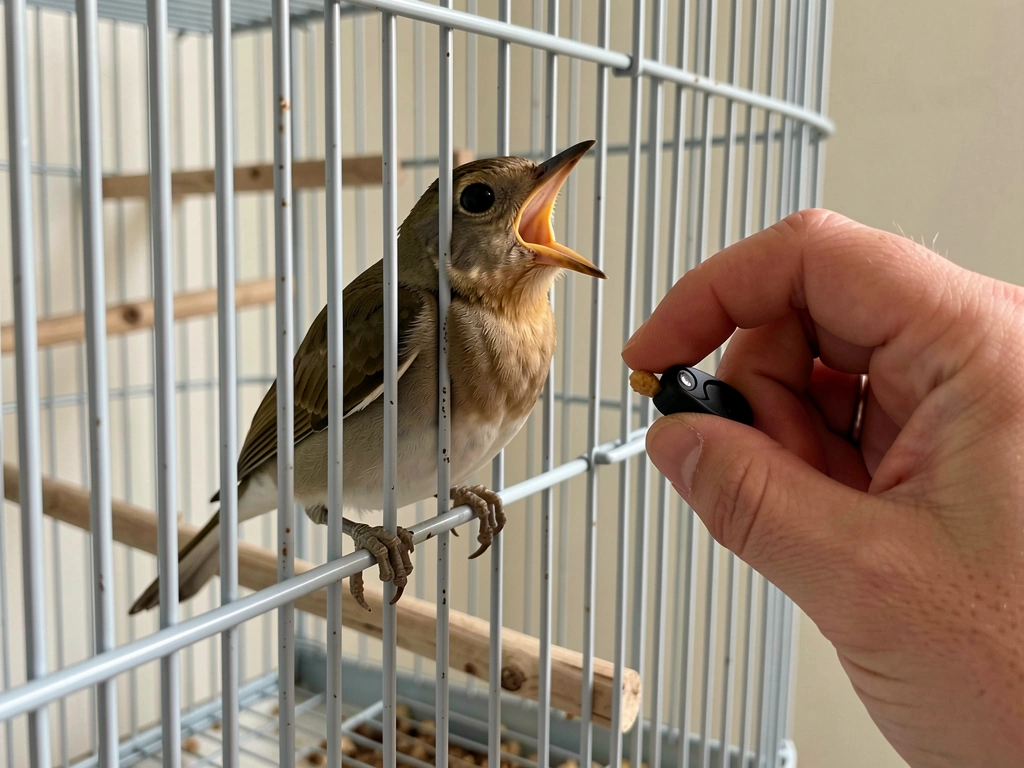
Positive reinforcement is the only method worth using here. That means every time your bird makes any attempt at vocalization during a session, you reward it immediately. Withholding rewards or showing frustration when the bird does not perform are both counterproductive. The bird is not being stubborn; it is still processing. Your job is to make vocalizing feel like the best thing that ever happened to it.
- Get the bird's attention first. Stand or sit at eye level, make soft eye contact, and say the bird's name calmly. Wait until the bird is watching you and not distracted before you start.
- Say your target phrase once, clearly and warmly. Do not repeat it five times in a row right away. Say it once, pause for about 10 seconds, and watch the bird's reaction.
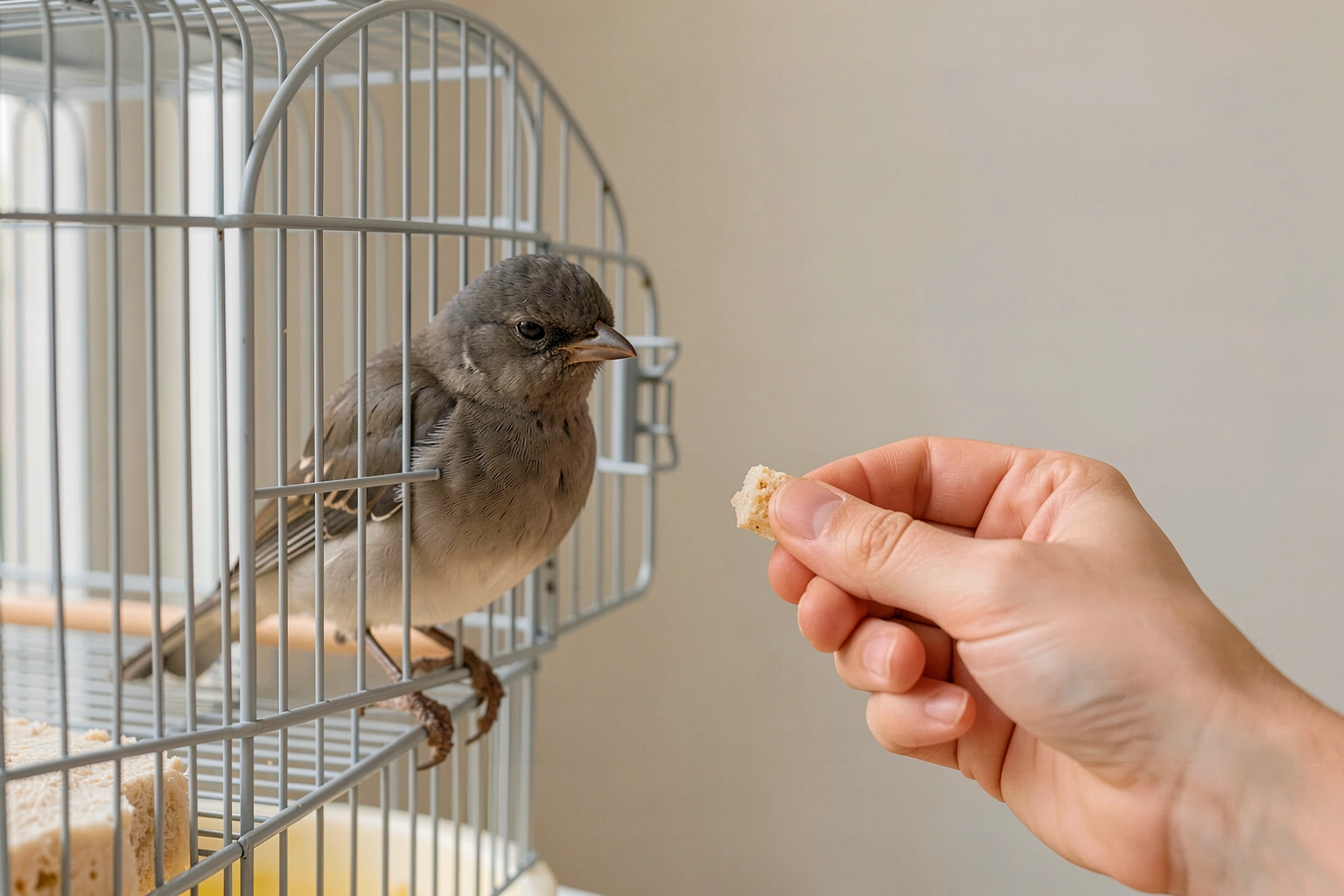
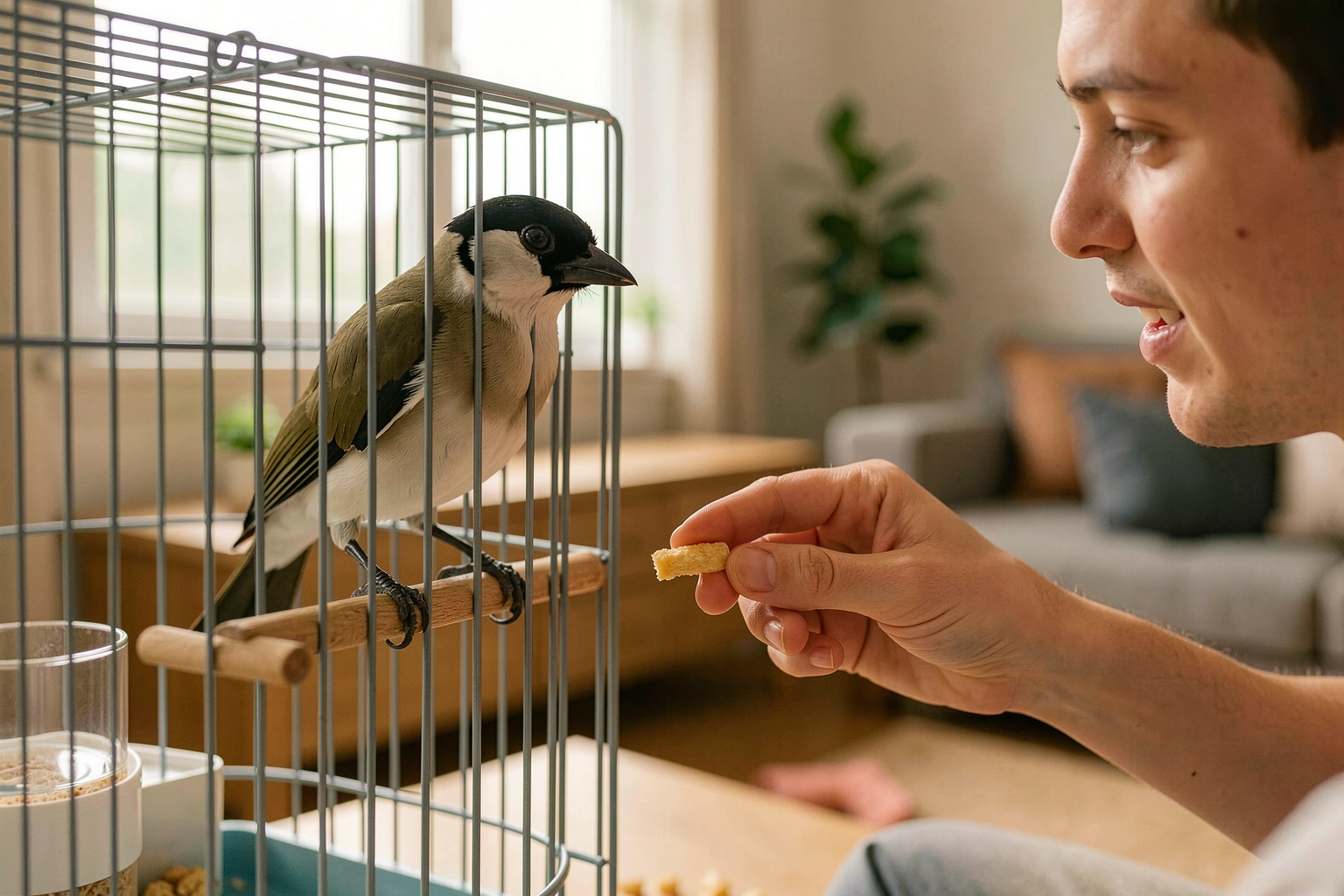
- If the bird makes any sound at all, including a partial attempt, an approximation, or even just a beak movement, reward immediately. Use a small piece of a healthy food treat the bird loves: a sliver of fruit, a piece of cooked egg, or whatever your bird responds to best.
- If you are using a clicker, click the instant the bird vocalizes and follow with the treat within a second or two. The click marks the exact moment of correct behavior so the bird understands precisely what earned the reward. Do not delay the treat after clicking.
- Repeat the phrase again, wait, reward any vocalization. Run 5 to 10 of these repetitions per session, then stop on a positive note.
- End every session with a small reward regardless of how the session went. This keeps the bird feeling positive about training time overall.
If your bird is not producing any sounds at all yet, reward attention first. Reward the bird for looking at you, for being calm near you, for any interaction. Build the habit of engagement before you demand vocalization. Some birds need a week or two of just positive social time before they are ready to participate in active training.
Teaching individual syllables and word approximations
Do not hold out for a perfect word before rewarding. If your target word is 'hello' and your bird produces something that sounds like 'ello' or even just a tonal rise that mimics the melody of the word, reward it. Over time, as you keep rewarding, the approximation gets closer and closer to the actual word. This is called shaping, and it is the most effective way to build clear speech rather than waiting for accidental perfection.
Session structure and consistency: how often, how long, and tracking progress
One or two sessions per day of five to ten minutes each is the right starting structure for most birds. BSAVA advises keeping sessions no longer than the bird's attention span, which for many birds is as little as five minutes at the start. VCA recommends the same range. Short sessions are not a compromise; they are actually more effective than long ones because the bird stays engaged the whole time rather than tuning out halfway through.
Consistency matters far more than session length. A bird that hears its target phrase once in the morning and once in the evening every single day will outperform a bird that gets an hour of training on Saturdays and nothing during the week. Build sessions into fixed points in your daily routine, right after you wake up and before you leave the house, or at feeding time. The routine itself becomes a cue that learning time is starting.
Track progress with a simple log. It does not need to be complicated: a note in your phone with the date, what phrase you worked on, and what the bird produced. This helps you notice patterns, like a bird that performs better in the morning or one that is making gradual progress that is easy to miss day to day. If you have been at it for four weeks with zero vocalization attempts, that is a signal to troubleshoot rather than just keep repeating the same approach.
| Training variable | Recommended approach | What to avoid |
|---|---|---|
| Session length | 5 to 10 minutes per session | Longer than 15 minutes; bird loses focus |
| Frequency | 1 to 2 sessions per day | Irregular or weekly-only sessions |
| Number of target phrases | 2 to 3 to start | Too many phrases at once |
| Reward timing | Immediately after correct behavior | Delayed rewards; confuses the bird |
| Tone of voice | Warm, clear, slightly musical | Flat, loud, or frustrated tone |
| Response to failure | Stay neutral, try again later | Scolding, repeating phrase rapidly in frustration |
Troubleshooting when your bird won't talk or only makes partial sounds
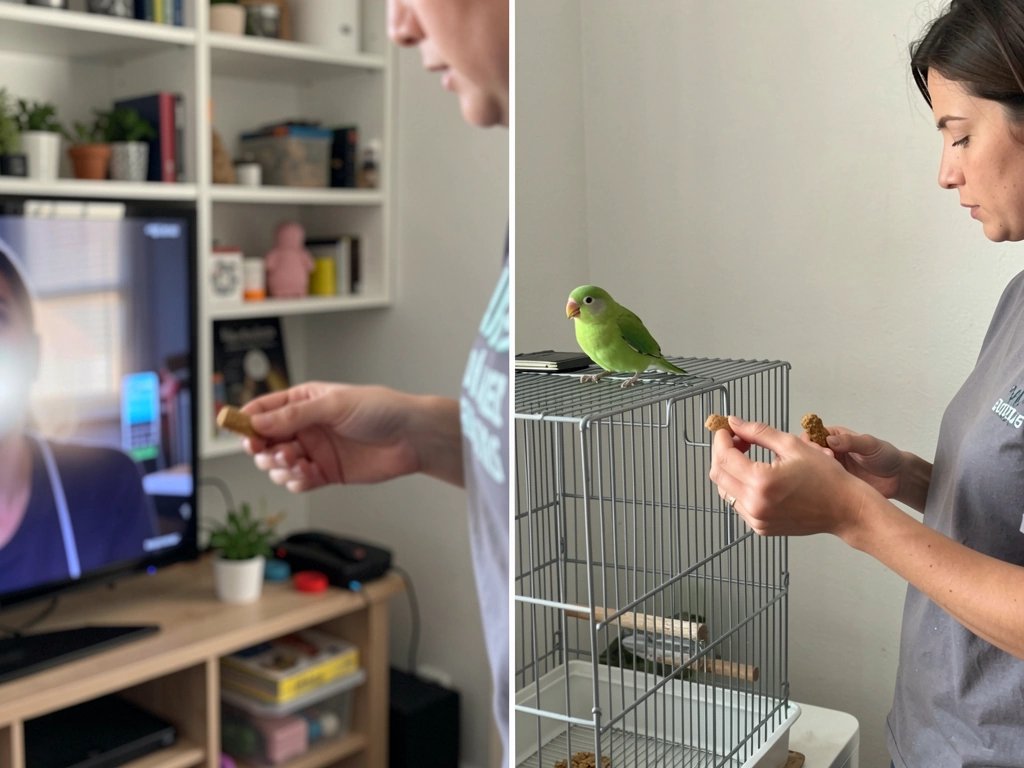
The most common reason a bird stalls is that the training environment has too many competing stimuli. If the TV is on, other birds are calling nearby, or the household is loud during sessions, the bird is getting a lot of acoustic input and your target phrase is just one sound among many. Try moving sessions to a quieter room or a quieter time of day and see if that shifts things.
If your bird only produces partial sounds, that is actually progress, not failure. Reward partial sounds consistently and keep going. Over days and weeks, the partial sounds will refine. If the bird is producing sounds but they are not the target phrase at all (random chirps, other noises), that still shows it is comfortable vocalizing, which is the foundation you need. Keep reinforcing any vocalization during sessions and gradually become slightly more selective about which sounds earn the biggest reward.
If the bird shows fear, tries to bite, or becomes agitated during sessions, stop immediately. Do not push through stress. Avian behavior experts describe this as training within the 'calmness threshold,' and it means you should only practice when the bird is relaxed and willing. If aggression or anxiety is a recurring issue, scale back to simple positive social time with no demands, and consider consulting an avian vet or a specialist in bird behavior. BSAVA notes that severe behavior problems may warrant a referral to a specialist, and that is always a reasonable step if you are stuck.
- Bird ignores training entirely: reduce session length to 3 minutes, increase treat value, try a different time of day
- Bird only mimics non-speech sounds: it is still mimicking, redirect by repeating target phrase immediately after any sound it makes
- Bird used to attempt words but stopped: check for stress, illness, or environmental changes; rule out health issues with a vet visit
- Bird is aggressive during sessions: stop, back off, rebuild trust; never force interaction
- Progress has plateaued for weeks: introduce a slightly new phrase or try a different delivery tone to re-engage the bird's curiosity
Avoiding common mistakes and your first week plan
The biggest mistake most beginners make is repeating the target phrase over and over in a rapid, almost mechanical way during a single session. Saying 'hello hello hello hello' ten times in five seconds does not help the bird; it creates noise, not a clear signal. Say the phrase once, wait, reward, then say it again. Silence between repetitions is part of the training.
The second most common mistake is inconsistency with rewards. If you reward a behavior sometimes and not others, the bird cannot figure out what you want. Every attempt at the target sound in the early weeks should be rewarded every single time. You can gradually become more selective as the bird gets more consistent, but not yet. Early training is about building a strong association between the sound and good things happening.
Avoid punishing the bird for not performing. Raising your voice, covering the cage, or showing obvious frustration all damage the trust that makes training possible. If a session is going nowhere, end it calmly and try again later. The bird is not defying you; it just needs more time or a slightly different approach.
What to do this week: a beginner's first seven days
- Day 1: Confirm your bird's species and approximate age. Note how social it currently is and whether it vocalizes at all on its own.
- Day 1 to 2: Choose your first target phrase (one or two syllables). Begin using it consistently every time you approach the cage, even without a formal session.
- Day 2 to 3: Start your first formal sessions. Two sessions of 5 minutes each. Say the phrase, pause, reward any vocalization or social response. End on a positive note.
- Day 3 to 5: Keep sessions at 5 minutes, twice daily. Start a simple log: date, phrase used, bird's response.
- Day 5 to 7: Evaluate. Is the bird engaging with you? Making any sounds during sessions? If yes, keep going with the same structure. If not, revisit the environment for distractions and check that your treat choice is actually motivating to the bird.
- End of week 1: You should have 10 to 14 sessions logged and a clear sense of your bird's baseline engagement level. Adjust session length, treat type, or timing based on what you observed, not on what you hoped would happen.
Teaching a Martinez bird to talk is a genuinely rewarding process, but it runs on patience and consistency more than technique. The method is straightforward: choose short phrases, say them clearly in context, reward every attempt, keep sessions brief, and show up every day. If you do that, you give your bird the best realistic shot at becoming a talker. And if you are also working on how to teach your bird to say peekaboo alongside speech training, keep those as separate sessions so the bird learns to distinguish between the two types of vocalization you are encouraging.
FAQ
What treat should I use when teaching a Martinez bird to talk, and how do I give it during training?
Use small, bite-sized treats your bird already accepts easily (many trainers prefer soft favorites that can be delivered quickly). Give the reward immediately after the vocal attempt, keep handling minimal, and use one hand to offer the treat so your voice cue and reward happen in the same second. If you have to scramble for treats, you will break the timing that makes shaping work.
My bird makes sounds but not the exact phrase. Should I switch phrases or keep the original one longer?
Keep the original target phrase for longer if you are getting any “near” sounds (same rhythm, similar start sounds, or close approximations like “ello” for “hello”). Switch only if the bird shows no movement toward the target after several weeks or if it begins a different word consistently. When you do switch, return to fewer words (one phrase only) for a week before adding a second.
How long should I wait before assuming my bird is “not going to talk”?
Aim to confirm progress by vocalization attempts first (any vocalization during sessions), then look for consistent approximations over time. If you truly have zero vocal attempts after 3 to 4 weeks of calm, consistent sessions, treat it as a setup problem (noise, stress, bonding, or session timing) rather than a fixed outcome. Many birds start with partial sounds and only later produce clearer speech, so avoid quitting before you see at least some patterned attempts.
Is it okay to play recordings of me saying the phrase to speed things up?
It can backfire if the recording becomes the main voice the bird learns, because the bird may mimic the audio but not generalize to you in real life. If you use audio, treat it as supplemental background rather than the core trainer voice, and always keep rewards linked to vocal attempts during your in-person sessions.
Should I teach my Martinez bird to talk using the same phrase every time, or can I use different words in the same session?
Stick to one to two phrases per training block. Within a single session, say the target phrase, pause, wait for any vocal attempt, and reward. Switching words mid-session often turns learning into random noise, and the bird may learn that it is safer to remain quiet until you say a different sound.
How do I know the bird is stressed versus just not interested, and what should I do in that case?
Stress signs include retreating, flattening, repeated lunging, tail or wing tension, or frantic cage movement. In those cases, stop immediately and go back to low-pressure social time with no demands. If the bird looks calm but is simply not vocalizing, extend bonding time and verify the environment is quiet, the perch is stable, and your sessions are short enough that the bird stays engaged.
Can I teach multiple phrases at the same time, or will that slow everything down?
Teach up to two to three phrases only if the bird is already producing reliable approximations for the first one. Start with one phrase for several weeks, then add a second when you see consistent near-sounds. If you add phrases too early, you risk teaching general “repeat sounds” instead of building a clear association between a specific context cue and a specific word.
What time of day works best for sessions, and does it matter?
It matters because attention and noise levels change throughout the day. Many birds do best when the home is calmer and the bird is not hungry or overly stimulated. Use your daily routine to anchor training at predictable times (for example, right after you wake up or before you leave), and then use your progress log to confirm which time produces the most vocal attempts.
My bird only talks when I am not in the room. How can I get it to vocalize during training?
Some birds “save it” for moments when they feel safest. Instead of increasing pressure, adjust the session cue: bring the bird to a consistent viewing position near eye level, keep your body movement slow, and pair the phrase with a reliable moment like treat delivery. Also reward any vocalization that happens during your presence, even if it is not the exact word yet.
What are the safest ways to avoid the most common training mistakes?
Avoid rapid repetition, keep silence between tries, and reward every vocal attempt during early weeks. Also avoid punitive reactions like scolding, covering the cage, or getting visibly frustrated. If a session is not progressing, end it calmly rather than “trying harder,” then restart later when the bird is more relaxed.
Next Article
How to Get a Bird to Like You: Step-by-Step Tips
Step-by-step trust building with your pet bird: reading stress vs trust, positive rewards, target and step-up, and avoid