Getting a bird to like you comes down to one thing: making the bird feel safe around you consistently, over time. That's it. Birds don't bond out of obligation the way dogs sometimes do. They choose you, and that choice is built through patience, reading their signals correctly, and never pushing faster than they're comfortable with. Whether you have a brand-new parrot, a rescue cockatiel, or a budgie that still flies to the back of the cage every time you walk in, the same core principles apply. This guide walks you through exactly what to do, starting today.
How to Get a Bird to Like You: Step-by-Step Tips
Maya Harris
22 Mar 2026
Why your bird won't trust you yet (and why that's normal)
Birds are prey animals. Their entire survival strategy in the wild is to be suspicious of anything large, unfamiliar, or unpredictable. When you brought your bird home, you became, from their perspective, a giant, strange creature with no track record. Even hand-raised birds from a breeder can regress when placed in a new environment because the sights, sounds, smells, and routines are all different. A newly rehomed parrot, for example, typically needs a full acclimation period before real bonding can begin. Programs that work with rescued parrots treat the first 72 hours as critical, and advise not disrupting that acclimation process during the first week at all. That's not coddling the bird; it's respecting how their nervous system actually works.
Beyond the adjustment period, some birds have histories you don't fully know. A rescue bird may have been mishandled, under-socialized, or kept in a chaotic environment. Even birds with no obvious trauma can be naturally more cautious based on species or individual temperament. African Greys, for instance, are notoriously sensitive and can take months to warm up. A green-cheeked conure might be climbing on you in a week. Neither timeline is wrong. The mistake most people make is treating a slow start as a failure instead of as baseline.
The practical takeaway here: if your bird is not responding to you yet, it doesn't mean they dislike you. It means they don't know you yet. Your job for the first days and weeks is simply to become predictable, non-threatening, and associated with good things.
Reading bird body language: stress signals vs trust signals
You can't bond with a bird you can't read. Before you do anything else, learn to recognize what stress looks like in your specific bird, because what looks like calm in one species can be the opposite in another. Here are the clearest signals to watch for.
Signs your bird is stressed or fearful
- Feathers slicked tightly against the body (not fluffed, sleeked down flat)
- Eyes pinned wide open and not blinking, fixed on you
- Rapid breathing or panting when you haven't touched them
- Lunging, biting, or hissing when you approach
- Retreating to the far corner or back perch of the cage every time you enter the room
- Screaming or alarm-calling when you move near them
- Tail bobbing rapidly combined with tense posture
Signs your bird is relaxed and beginning to trust
- Feathers slightly puffed in a relaxed way (not sleeked down), especially around the head and neck
- Slow blinking or half-closed eyes when you're nearby
- Grinding the beak (a sign of contentment, often done before sleep)
- Preening in your presence (they only preen when they feel safe)
- Moving toward you on the perch rather than away
- Accepting food from your hand without retreating
- Vocalizing in soft, conversational tones when you talk to them
- Foot-tapping or "dancing" in response to your voice
One nuance worth mentioning: a bird that bites hard and then immediately goes back to exploring is different from a bird that bites and flees. The first is often a communication issue or overstimulation. The second is fear. Treating both the same way will get you nowhere. If you're seeing a lot of fear-based stress signals, slow everything down before you try any active training or handling.
Building positive association with you
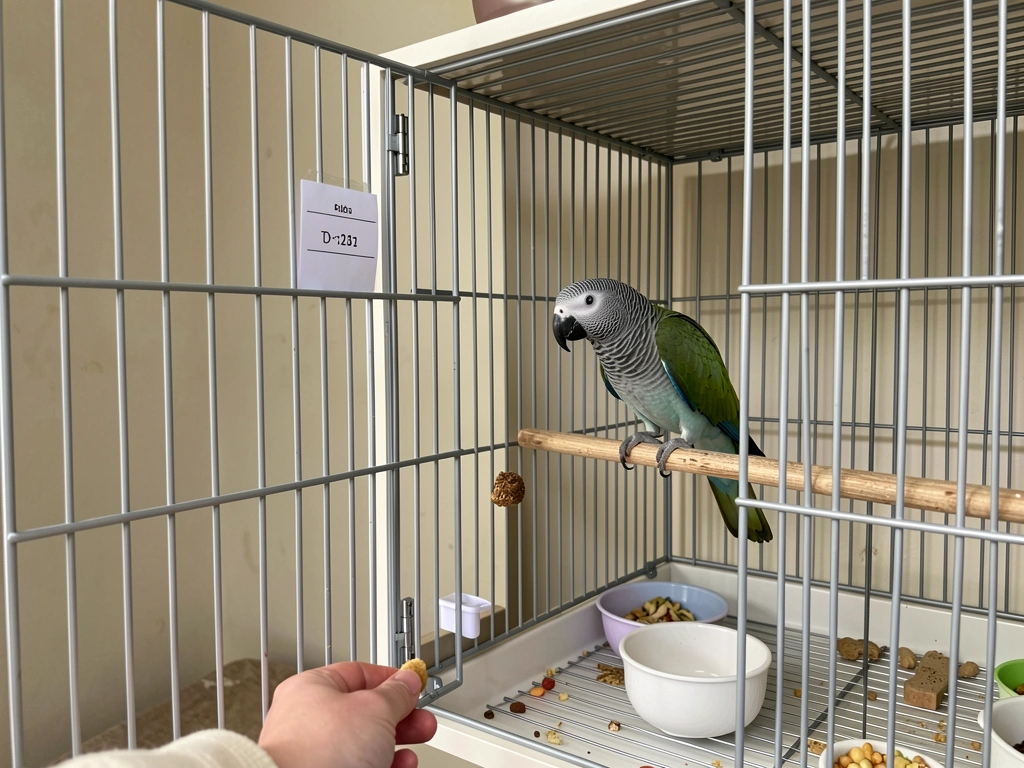
The foundation of getting any bird to like you is something behavioral trainers call positive association: the bird learns, through repeated experience, that your presence predicts good things. This happens through three main channels: routine, voice, and proximity.
Establish a predictable daily routine
Birds are creatures of habit and they find routine calming. Feed them, uncover the cage, and interact at the same times each day. When your bird can predict what happens next, their baseline anxiety drops. Within a week of consistent routine, most birds show measurably calmer body language compared to their first days. Morning is typically the best time for interaction because birds are naturally more social and curious then. Keep evening interactions quieter and lower-key since most birds wind down as light fades.
Use your voice before anything else
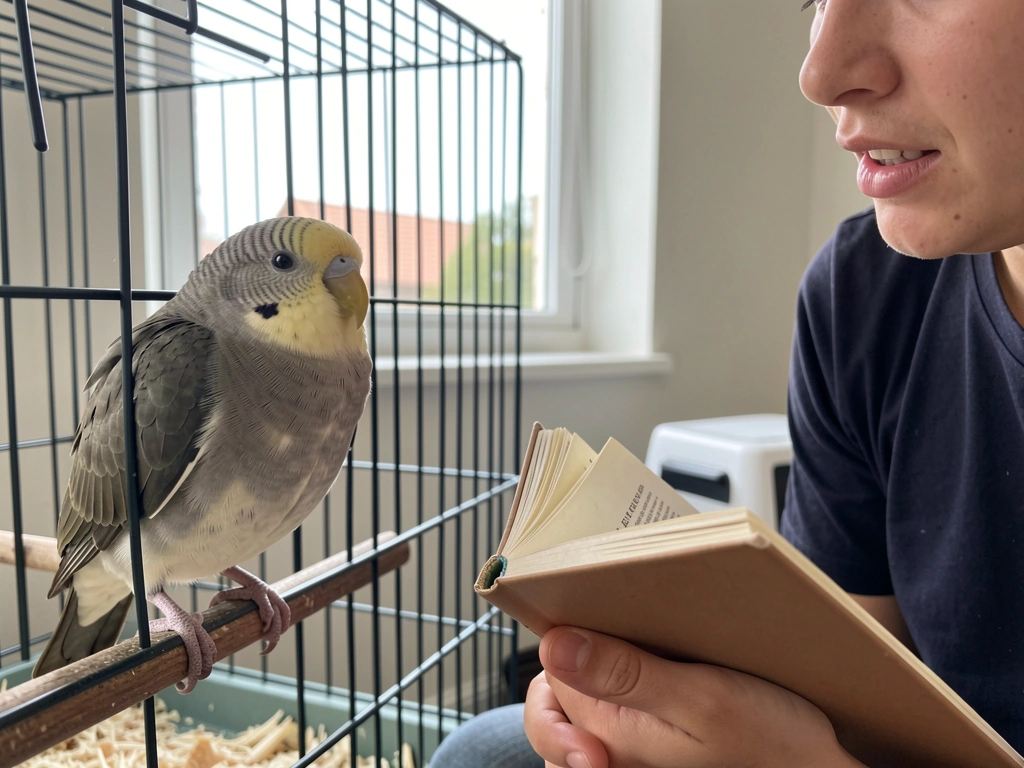
Talk to your bird constantly, even when you're not interacting directly. Narrate what you're doing in a calm, even tone. Read aloud. Sing. The specific words don't matter; the bird is learning the sound of your voice and learning that it's safe. Avoid sudden loud noises, dramatic gestures, or high-pitched alarming sounds. A soft, slightly lower-than-normal speaking voice works well with most species. Over time, your voice becomes a comfort sound rather than an alert signal.
Build proximity gradually
Don't rush to get your hand in the cage. Start by just being in the room, doing your own things. Sit near the cage and read a book. Eat a snack nearby and let the bird watch you. Move the chair a little closer each day, stopping if the bird shows stress signals. This is called systematic desensitization and it's the same method used by professional parrot trainers. You're teaching the bird that your proximity at 5 feet is safe, then 4 feet, then 3 feet, then right at the cage. It sounds slow but it compresses the trust timeline considerably compared to forcing interaction.
Treats and training for bonding
Once your bird is tolerating your presence without stress signals, you can start actively using food and training to build a real relationship. This is where bonding accelerates fast.
Find the right treat
High-value treats are the engine of bird training. The treat needs to be something your bird genuinely loves and doesn't get all the time. Common winners include small pieces of millet for budgies and small parrots, pine nuts for larger parrots, bits of cooked egg, tiny pieces of banana, or whatever you notice your bird going crazy for at mealtime. Keep training treats tiny (a piece the size of a pea or smaller) so the bird stays hungry enough to be motivated. A bird that just ate a full bowl of food has no reason to work for treats.
Start with hand-feeding
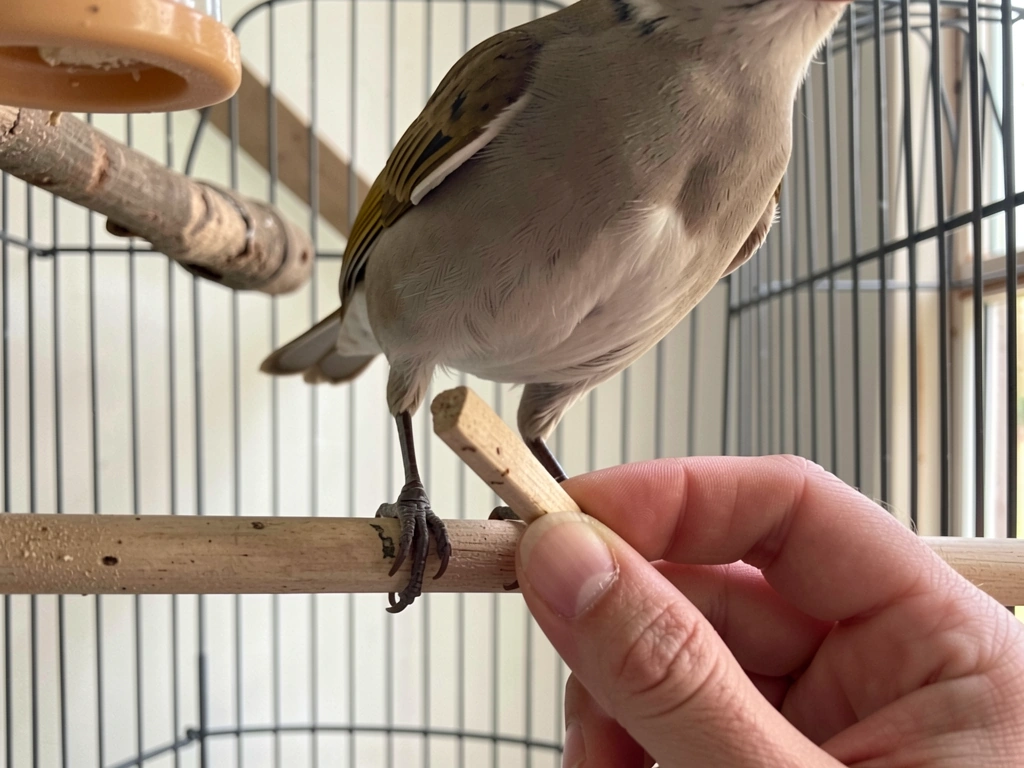
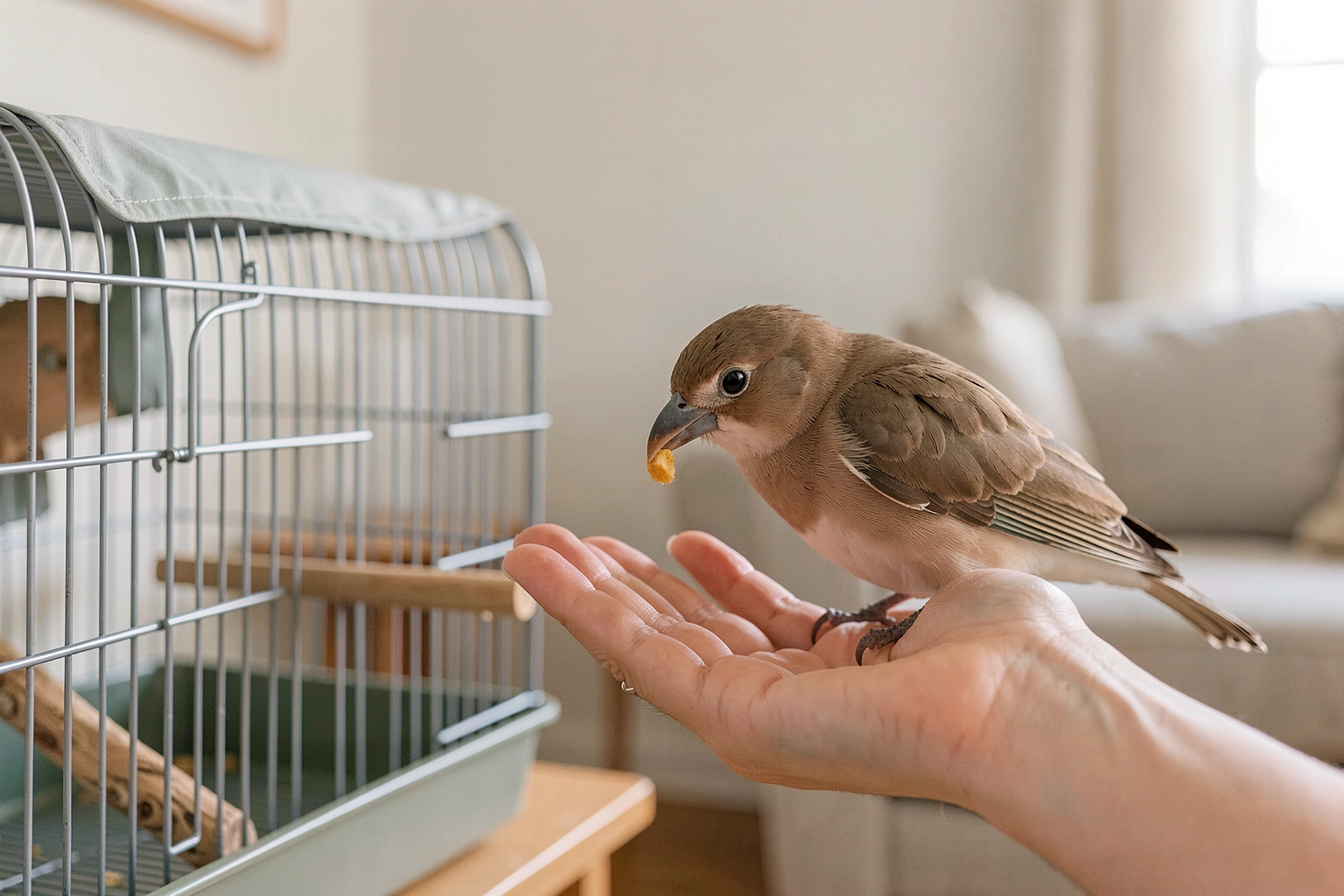
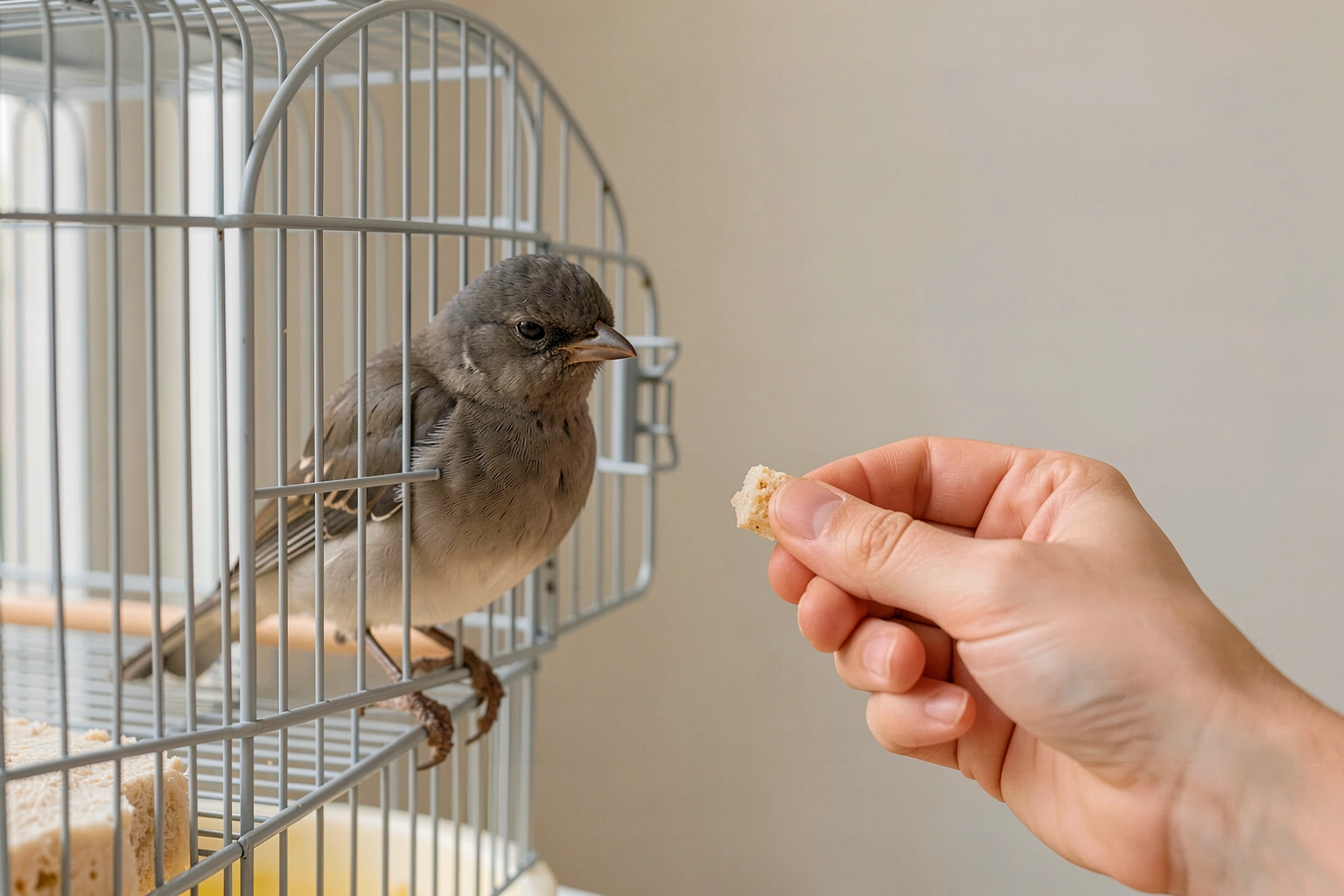
Before any formal training, just hand-feed treats through the cage bars or from an open palm near the cage door. Don't move your hand toward the bird; let the bird choose to come to you. The moment the bird takes a treat from your hand, even if they grab it and retreat, that's a win. Repeat this 5 to 10 times per session, a few times a day. Within days, most birds start positioning themselves near you when you approach because they've learned you bring food.
Teach the step-up
The step-up (getting the bird to step onto your finger or hand on cue) is the single most important behavior for daily life with a pet bird. To teach it, offer your finger or a perch stick just below the bird's chest, apply very gentle upward pressure, and say "step up" clearly. The moment they lift a foot and step on, reward immediately with a treat and calm praise. If they refuse or move away, don't chase. Back off, wait a few seconds, and try again. Keep sessions short: 3 to 5 repetitions is plenty for beginners. End on a success, even a tiny one.
Add a clicker or marker word
A clicker (or a consistent marker word like "yes" or "good") tells the bird the exact moment they did the right thing, before the treat arrives. This makes training much faster and clearer for the bird. The process is simple: click the moment the desired behavior happens, then give the treat within 2 to 3 seconds. Once your bird understands that the click means a treat is coming, you can use it to mark everything from stepping up to taking a treat calmly to staying on your hand without fidgeting. Clicker training works with every parrot species and most other pet birds including cockatiels, budgies, conures, and lovebirds.
Try target training
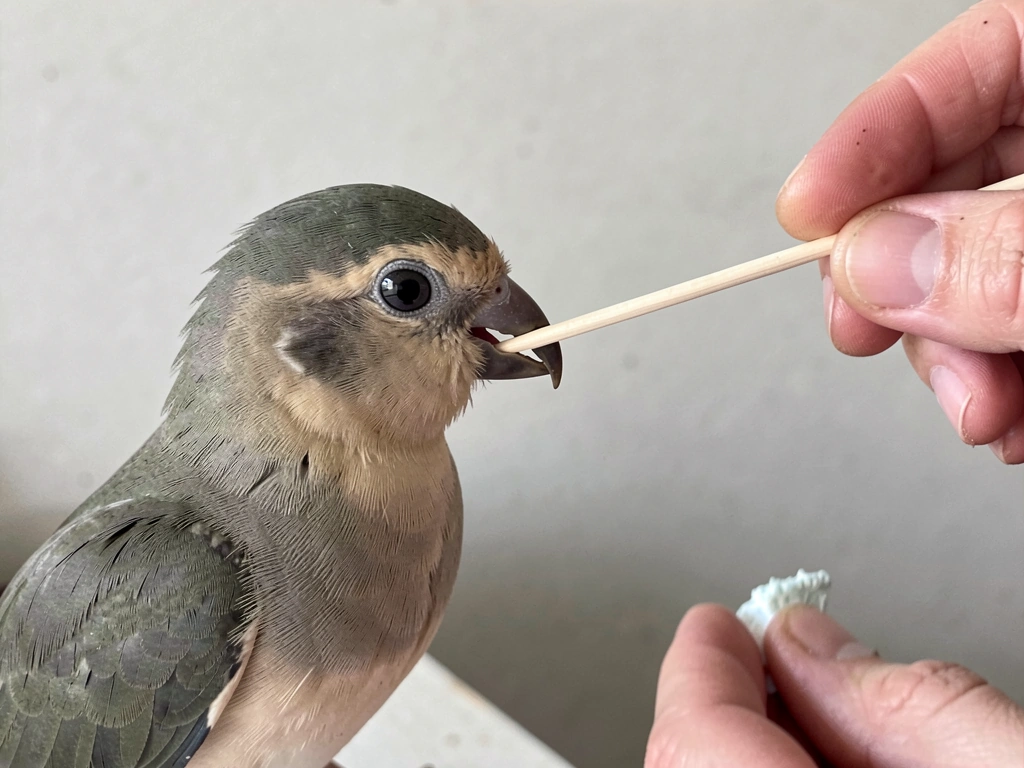
Target training is often the easiest starting point for birds that are still nervous about hands. You present a target (a chopstick, a pencil eraser, or a commercial target stick) near the bird, and when they touch it with their beak, you click and treat. This teaches the bird to voluntarily move toward an object you control, which builds confidence and opens the door to more complex behaviors. Target training also gives the bird a job, and having a job reduces anxiety in intelligent species like parrots.
How to handle and interact safely
Handling is where a lot of people accidentally undo weeks of trust-building. The key concept here is consent. Birds communicate very clearly whether they want to be touched or picked up, and respecting that communication is what separates a bird that tolerates you from a bird that genuinely likes you.
Always ask before you touch
Before reaching for your bird, watch their body language. Are they leaning toward you? Moving toward your hand? Eyes soft and blinking? Those are green lights. Are they leaning away, feathers sleeked, eyes wide? That's a no. Respect the no every single time. Birds that are forced into handling learn to dread interaction because they've learned that their signals are ignored. Birds whose signals are respected learn that being near you is always safe, which ironically makes them more willing to be handled.
Move slowly and approach from the side
Never approach a bird from above. From a bird's perspective, anything coming from above is a predator (a hawk, an eagle). Approach at eye level or slightly below, from the side, with slow and predictable movements. When offering your hand, present the back of it first, fingers slightly curled, rather than an open palm or pointing fingers. This looks less threatening to most birds.
Keep early handling sessions very short
When you first start handling your bird, keep it to 30 seconds to 2 minutes maximum. Pick up, give a treat, do something calm together, put back. Always end the session while the bird is still comfortable, not after they've bitten or fled. That last impression matters a lot. Over time, as the bird relaxes, sessions naturally extend without you having to force it.
Respect where they like and don't like to be touched
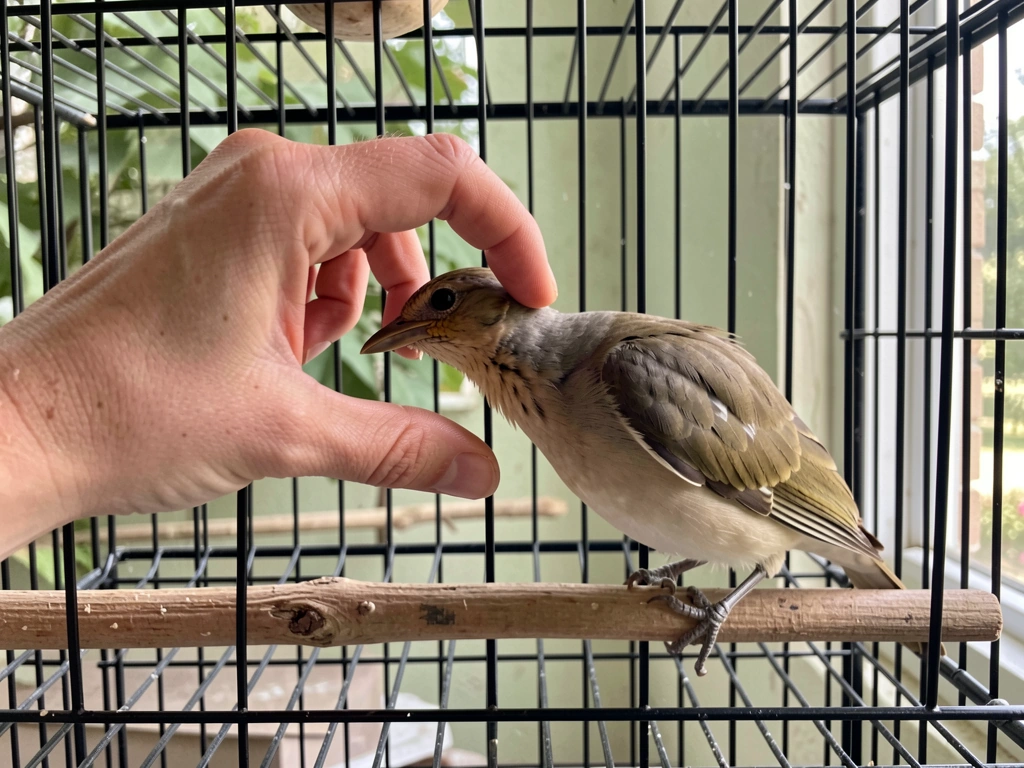
Most birds enjoy head scratches (especially on the pinfeathers behind the crest or at the back of the neck) but are uncomfortable with back or tail touching. Touching a bird's back and wings can trigger a mating response in some species, which creates behavioral problems over time. Stick to head and neck scratching for casual bonding. Let the bird guide you: if they lower their head and fluff up when you reach toward a spot, they're inviting touch there. If they pull away or bite, they're not.
Common mistakes that push birds away (and how to fix them)
Most bonding problems I see come down to a handful of repeated mistakes. Fixing even one or two of these can change your relationship with your bird dramatically.
| Mistake | Why it backfires | What to do instead |
|---|---|---|
| Forcing handling before trust is established | Creates fear-based association with you; bird learns to dread your approach | Follow the desensitization steps; let the bird set the pace |
| Moving too fast or making sudden gestures | Triggers prey-animal startle response; resets trust progress | Move slowly and deliberately; telegraph every movement |
| Punishing biting or bad behavior | Increases fear and stress; bird associates you with negative outcomes | Redirect, ignore, or end the session calmly without drama |
| Inconsistent routine or attention | Bird can't predict your behavior; baseline anxiety stays high | Same daily schedule for feeding, interaction, and sleep |
| Using hands to chase or grab the bird | Hands become predator tools in the bird's mind | Train the step-up so the bird chooses to come to you |
| Loud or chaotic household environment near the cage | Chronic low-level stress prevents relaxation and bonding | Place cage in a calm area; limit TV/music volume nearby |
| Expecting too much too fast | Frustration leads to pushing, which leads to regression | Celebrate micro-progress; compare to last week, not tomorrow |
One mistake worth calling out specifically: staring directly at your bird for extended periods. To a prey animal, a direct unblinking stare looks like a predator locking in. Practice slow blinking at your bird instead. Many birds will eventually blink back, which is essentially them saying they feel safe with you. It sounds small but it's a genuinely meaningful communication.
What it actually looks like when your bird likes (or loves) you
People often ask how they'll know when their bird actually likes them, as opposed to just tolerating them. There's a real difference and it shows up in specific behaviors. Here's what to look for as genuine affection rather than neutral coexistence.
Early signs of liking (weeks 2 to 6 for most birds)
- The bird moves toward you when you approach the cage rather than retreating
- They accept treats from your hand consistently and without hesitation
- They vocalize (chirp, talk, or whistle) when you enter the room
- They allow step-up without protest and don't immediately try to flee
- They watch you with relaxed, curious eyes rather than alarmed ones
Deeper bonding signs (weeks 6 to 12 and beyond)
- The bird actively seeks you out when out of the cage, flying to you or following you
- They attempt to preen your hair, eyebrows, or eyelashes (a major sign of affection)
- They regurgitate food for you (yes, this is how birds show love; it means they see you as a flock mate)
- They fall asleep on or near you with feathers puffed in contentment
- They protest loudly when you leave the room (separation calling)
- They accept extended touch and handling without fidgeting or biting
It's worth noting that different species express affection differently. A lovebird that's bonded to you will often want near-constant physical contact. An African Grey might show love through proximity and talking rather than cuddles. A budgie might chirp along with your conversations and bob its head at you. Learn your specific bird's vocabulary rather than expecting all birds to act like puppies.
Next steps to accelerate bonding (matched to temperament)
Once you're seeing early trust signs, here's how to keep the momentum going based on your bird's personality type.
| Bird Temperament | What they need most | Best next steps |
|---|---|---|
| Shy or fearful bird | More time, no pressure | Extend desensitization; add voice interaction daily; delay handling until clear green-light signals appear |
| Bold and curious bird | Mental stimulation and challenge | Introduce new training behaviors quickly; add foraging toys; increase out-of-cage time |
| Nippy or reactive bird | Clearer communication and shorter sessions | Focus on target training (no hands required); use clicker to mark calm behavior; end sessions early |
| Previously neglected or traumatized bird | Routine above all else | Strict daily schedule; very slow proximity-building; prioritize positive association before any training |
| Highly social or flock-oriented bird (lovebirds, conures) | Lots of daily interaction | Multiple short sessions daily; talk constantly; consider out-of-cage enrichment near you |
Building on the bonding basics covered here, you might also want to explore how to make your bird used to you if you're dealing with a bird that's simply never been well-socialized. Those are distinct problems with slightly different approaches, and handling them well will make everything in this guide work faster.
The honest truth about getting a bird to like you is that it is not complicated, but it does require consistency. You don't need expensive equipment, special training credentials, or hours every day. You need predictability, patience, and the ability to read and respect what your bird is telling you. Most birds, given time and the right approach, will come around. And when they do, when that bird flies across the room to land on your shoulder for the first time or falls asleep against your hand, it's one of the most rewarding things in pet ownership because you know they chose it.
FAQ
What should I do if my bird likes treats but still won’t step up?
Yes, but the goal is different. You want “your presence is safe,” not “your hand must be exciting.” If your bird goes stiff, backs away, screams, or escalates to fear signals, pause active steps like stepping up and return to room proximity, low-volume talking, and treat feeding from near the cage door until their body language softens again.
My bird bites when I try step up, how do I recover after a bad attempt?
Tempting, but avoid it. If you try to force contact right after a bite or flight, you usually teach the bird that the moment they show discomfort, you close the distance again. Instead, wait until the bird is calm, resume with target training or hand-feeding treats, and only attempt step-up when they are already moving toward your hand.
How can I tell if my treats are motivating enough, or if I’m overfeeding?
Use a “hunger gap.” Offer treats during training but avoid overfilling the main bowl right before sessions, and keep treats tiny. If your bird is already getting favorite foods all day, they may ignore training cues, so replace some less-loved portions with the training treats at specific times.
My bird is showing fear signals, can I still train or should I wait?
Stop and reset your approach. If the bird is fear-reactive, increase distance and time (more systematic desensitization), switch to beak-safe target work, and keep handling short and voluntary. Also make sure you are not accidentally approaching from above or using fast gestures, since either can recreate the predator feeling.
How do I adapt training for a bird that prefers climbing but hates being grabbed?
Yes, but do it carefully. Perch placement matters: keep the target perch at a height that the bird can reach comfortably, and use steady, non-rush steps. For nervous birds, start with placing the perch near them and reward for touching it, then gradually work toward stepping onto your hand from the easiest position.
Why might my bird seem to trust me at times but then suddenly gets defensive?
Too much eye contact is one common trigger, but there are others. Watch for sudden loud sounds, reaching over the cage, and inconsistent routines. Also note that some birds interpret high-pitched “baby talk” as alarm, so try a lower, steady tone and use fewer dramatic hand movements while you narrate.
Is it normal if my bird takes weeks to feel comfortable but then warms up quickly later?
Many birds will, especially when they learn that you respect consent. The best approach is “pre-approval”: ask for small permissions by offering your hand briefly, reading the response, and ending the interaction quickly if they tighten or lean away. Use short sessions and end during comfort, not after they bite or fidget.
How can I tell if “affection” might actually be hormonal behavior, and what should I change?
Possibly, especially if the bird is young, hormonal, or bonded to you. Look for mating-context body language, such as crouching, tail raising, rapid head movements, and persistent solicitation. If you see these, reduce back and tail contact (stick to head and neck), shorten handling, and avoid encouraging solicitations with extra attention during hormonally intense periods.
What’s the best way to get a bird comfortable with a carrier if it already distrusts handling?
If you must use a carrier or for vet visits, the transition should be gradual and never tied to punishment. Practice with the carrier door open in the room, reward any approach, then reward for stepping in for a second or two. For emergencies where time is limited, focus on calm handling and immediate treat delivery after any stress, so the bird learns the aftermath is safe.
Next Article
How to Get a Bird Used to You: Step-by-Step Trust Guide
Step-by-step plan to get a scared or shy bird used to you using routines, signals, treats, and safe handling stages.