Mynahs are genuinely one of the best talking birds you can own. A young Hill mynah with the right start can match or beat a parrot for clarity and range. But "right start" is doing a lot of work in that sentence. The training approach, the timing, the rewards, and even the phrases you choose all make a real difference. This guide walks you through everything from day one to the point where your bird is holding its own in a conversation, and tells you exactly what to do when things stall.
How to Teach a Mynah Bird to Talk: Step-by-Step
Maya Harris
22 Mar 2026
Understanding Your Mynah's Talking Potential
Hill mynahs are exceptional mimics. They can reproduce human speech with tonal accuracy that most parrots can't match, capturing pitch and inflection rather than just the shape of a word. That's the good news. The realistic news is that not every mynah will talk, and a few factors determine how likely yours is.
Age is the biggest one. Experts consistently recommend bringing home a hand-fed baby mynah at around 6 to 8 weeks old. A bird that young imprints strongly on its human caregivers, and that bond is what motivates speech in the first place. Most mynahs begin to produce their first words somewhere between 3 and 4 months of age, so if you start at 6 to 8 weeks, you have a comfortable runway to build up to that window. The younger the bird when training begins, the higher the probability it will become a talker.
That said, birds can learn to speak at any stage of development. An older or rescue mynah is a harder case but not a hopeless one. You may be working against already-established habits and a less flexible vocal-learning period, so your patience budget needs to be bigger. If the bird wasn't handled much or didn't develop as a strong communicator early on, progress will be slower, but positive results are still possible with consistent effort.
Temperament matters too. A bonded, curious, confident bird that seeks out your company is much more likely to try imitating you than a fearful or stressed one. Bonding comes before talking. If your bird isn't comfortable around you yet, speech training isn't ready to begin.
Getting the Right Setup: Space, Sound, and Cues
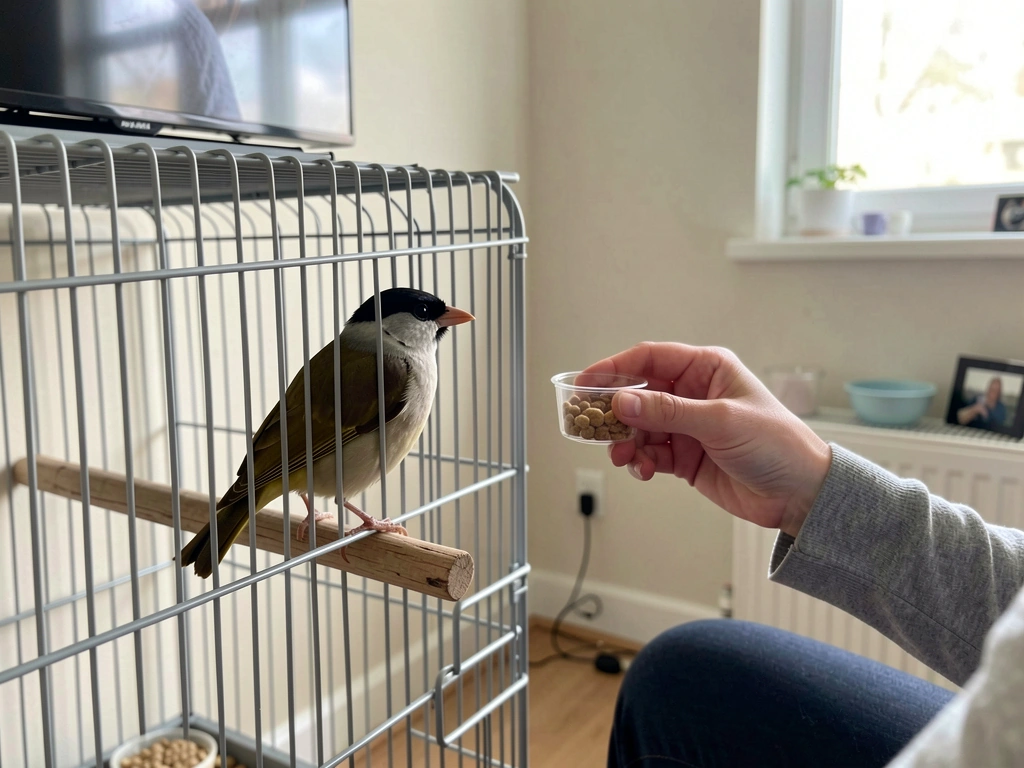
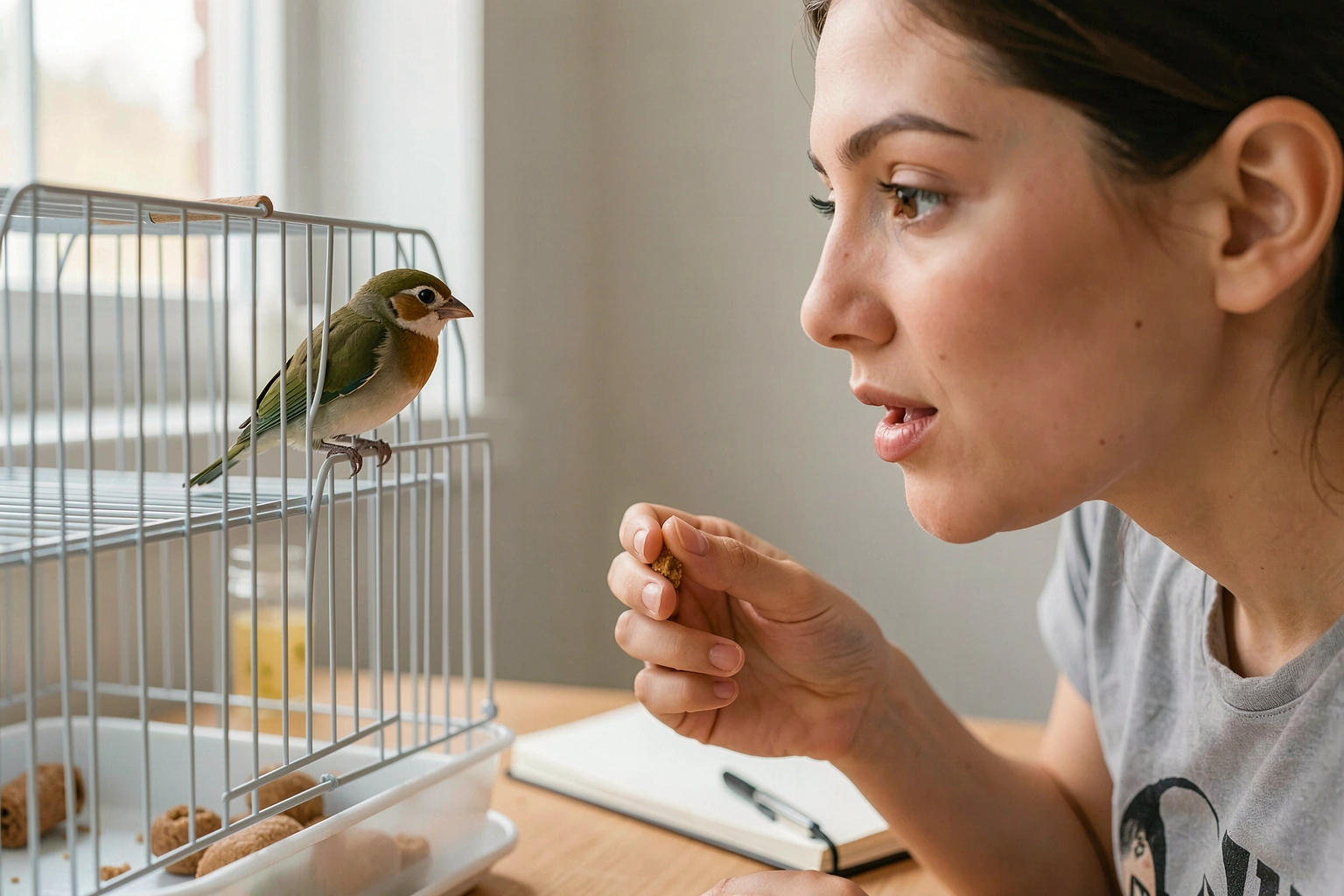
Training environment matters more than most people expect. A mynah learning to talk needs your undivided attention and needs to be able to hear you clearly. That means keeping training sessions in a quiet room with the TV off, other pets out, and household noise minimized. Distractions split the bird's focus and yours, and inconsistency is the enemy of progress.
The cage and perch setup should feel comfortable and familiar to the bird before you start formal sessions. Place the cage at roughly eye level when you're seated so your conversations happen face to face. Mynahs learn best through direct, emotionally engaged interaction with their primary caregiver, not from a recording playing across the room. Your voice, your face, your expressions: these are what make the difference between passive exposure and active learning.
Keep a consistent spot for training sessions. Over time, moving to that spot becomes a cue that "this is learning time," which helps the bird mentally shift into an engaged state. You don't need expensive equipment. A comfortable chair at cage height, a quiet room, and your own voice are all the gear you need to start.
- Quiet room with minimal background noise during every session
- Cage at eye level so you're interacting face to face
- Consistent training location used session after session
- One primary trainer, at least in the early weeks, so the bird bonds to a single voice
- TV, radio, and other bird vocalizations turned off during training
Step-by-Step Training Routine
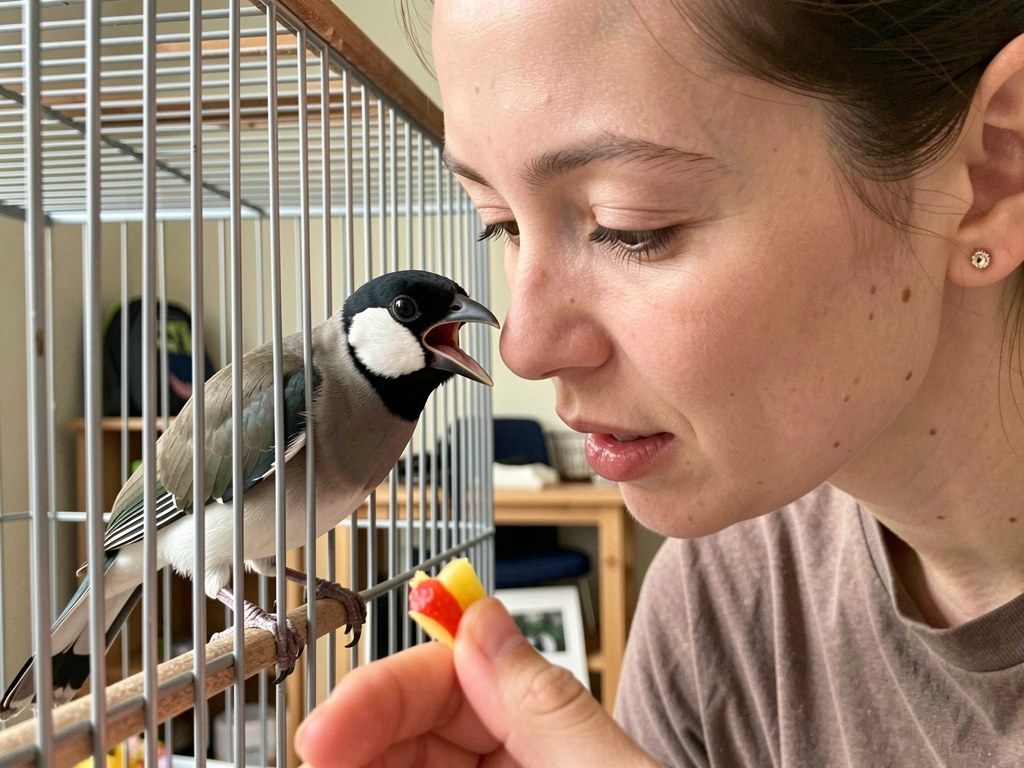
Short, focused sessions work better than long, unfocused ones. Aim for 10 to 15 minutes per session, once or twice a day. More time than that tends to push the bird past its attention span and into boredom or frustration, neither of which helps learning. Consistent daily sessions beat occasional marathon attempts every time.
- Start each session by greeting your bird warmly and letting it settle. If it's visibly agitated, wait or skip the session.
- Say your chosen word or short phrase clearly, at a natural volume, with the same tone every time. Look at the bird while you say it.
- Pause and give the bird 10 to 15 seconds to respond. Don't rush into repeating.
- If the bird makes any vocalization, even a rough approximation, immediately reward it (more on rewards below).
- Repeat the phrase 3 to 5 times per session, always with the same delivery.
- End on a positive note: a treat, a head scratch, or enthusiastic praise before wrapping up.
- Keep a simple log: date, phrase used, any attempt made. Patterns become visible over days and weeks.
The key principle here is breaking the behavior into small, rewardable steps. You're not waiting for perfect speech before you reward. You're rewarding effort and approximation, then gradually raising the bar as the bird gets closer to the target sound. This is how professional avian trainers approach speech: shape the behavior incrementally rather than expecting the finished product from the start.
Choosing Sounds and Phrases, and Using Repetition Properly
Start with a single word or short phrase, not a sentence. Pick something with clear, distinct sounds and high emotional relevance to your daily routine. "Hello," your bird's name, or a greeting you use every time you approach the cage are natural starting points. The more consistently that word appears in your interactions, the faster the association forms.
Repetition is the engine of the whole process, but it needs to be purposeful. Saying a word 50 times in a monotone row doesn't do much. What works is pairing the word with a consistent context: say "hello" every single time you walk up to the cage, say the bird's name every time you offer food, say "good bird" every time you give a reward. Context-anchored repetition is far more powerful than drilling in isolation because the bird learns meaning alongside sound.
Once your bird is consistently attempting the first word, introduce a second one. Don't add it until the first is reasonably solid. Stacking too many targets at once dilutes progress on all of them. Many successful mynah owners report that once a bird has mastered two or three words, new ones come faster because the bird has essentially learned how the game works.
Avoid using recorded audio as a substitute for your voice in early training. Recordings lack the facial expression, eye contact, and emotional engagement that make a human voice meaningful to a bonded bird. After your bird has a foundation in a few words, playing back short recordings of your own voice as a supplement can reinforce specific phrases, but it shouldn't replace live interaction.
Reinforcement, Timing, and Common Mistakes
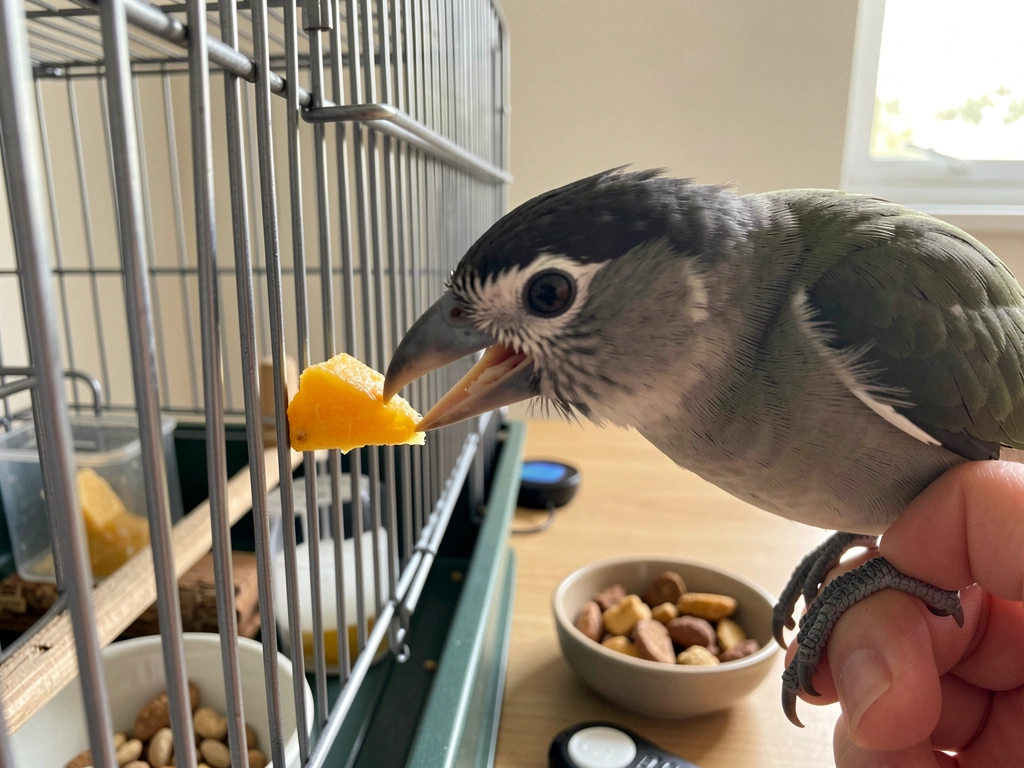
Positive reinforcement is the only approach you should be using. Aversive methods, including scolding, covering the cage as punishment, or any fear-based correction, don't teach speech. They teach the bird to avoid you, which is the exact opposite of what promotes talking. Stick with rewards the bird actually values.
Effective rewards for mynahs include small pieces of preferred fruit (keeping portion size appropriate so treats don't displace a balanced diet), head scratches if your bird enjoys them, and enthusiastic verbal praise delivered in a high-pitched, sing-song tone. Most mynahs respond strongly to that kind of excited greeting voice. Figure out what your specific bird finds most motivating and use that as your primary reward.
Timing is critical. The reward needs to come immediately after the desired vocalization, not 30 seconds later when you've walked to the kitchen to get a treat. The bird needs to connect the behavior with the consequence in real time. If you can't deliver a food treat fast enough, enthusiastic verbal praise the instant the bird attempts the sound is a perfectly valid bridge reward. Some trainers use a clicker as a precise marker that tells the bird "that sound, right there, is what earned the reward," which can sharpen the association considerably.
Mistakes That Stall Progress
- Training sessions that are too long: the bird loses focus and talking becomes associated with tedium
- Inconsistent phrase delivery: changing your tone or wording confuses the bird about what it's supposed to imitate
- Rewarding random vocalizations that aren't attempts at the target word, which muddies the association
- Accidentally reinforcing screaming or other unwanted sounds by responding to them with attention
- Skipping days and then doing marathon sessions to compensate: consistency beats intensity
- Starting with phrases that are too long or phonetically complex before the bird has any foundation
- Using punishment when the bird doesn't perform: this builds fear and avoidance, not talking
Troubleshooting: When Your Mynah Won't Talk
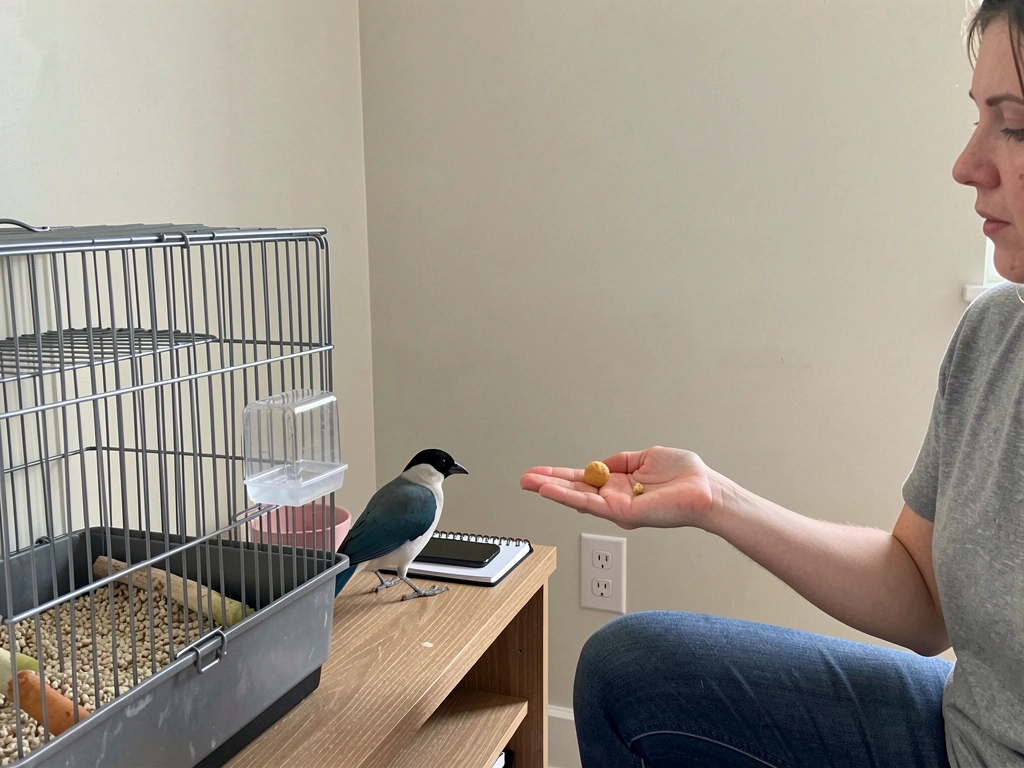
If you've been training consistently for several weeks and seeing zero response, work through this checklist before concluding the bird "just won't talk."
First, check whether your bird is actually bonded to you. A bird that moves away from you, fluffs up during sessions, or shows stress signals (rapid breathing, feather slicking, biting) isn't in a learning state. Watch for those body language cues and back off if you see them. Pushing through stress doesn't accelerate learning; it builds a negative association with the training context. Spend more time on low-pressure interaction before returning to formal sessions.
Second, consider health. A bird that has suddenly gone quiet after previously vocalizing well may be unwell. Changes in vocal behavior can reflect underlying health issues, and if your mynah has stopped making sounds it used to make regularly, a vet visit is warranted before you troubleshoot training. Mynahs are sensitive birds and health problems can appear as behavioral changes.
Third, review your setup. Is the room actually quiet during sessions? Are you training at the same time each day? Is the bird fully settled before you start? Is the reward arriving fast enough after any vocalization? Often the problem isn't the bird, it's one of these environmental or timing factors.
If the bird is vocalizing freely on its own but not imitating you, try matching the bird's existing sounds first. If your mynah makes a particular chirp or whistle, mimic that sound back to it. This builds a "conversation" pattern and can open the door to the bird starting to imitate your sounds in return. Think of it as establishing the concept that you and the bird exchange sounds, before you start directing which sounds.
| Problem | Likely Cause | What to Try |
|---|---|---|
| No vocalization at all during sessions | Stress, poor bonding, or health issue | Slow down to low-pressure time together; rule out illness with a vet check |
| Bird vocalizes freely alone but ignores training | Session context feels unnatural or pressured | Mimic the bird's own sounds first; make sessions feel like conversation |
| Bird was progressing, then stopped | Possible health change, boredom, or routine disruption | Check for illness; review whether routine has shifted; try a new reward |
| Bird makes sounds but nothing close to the target | Target phrase may be too complex | Simplify to a single syllable; reward any approximation generously |
| Bird only talks when you're not watching | Performance anxiety or reward timing is off | Use a softer presence; try rewarding any spontaneous attempt when overheard |
Long-Term Maintenance and Realistic Expectations
A realistic timeline for a young mynah brought home at 6 to 8 weeks: expect the first attempts at words somewhere in the 3 to 4 month age range, with recognizable words solidifying over the following weeks to months depending on the individual bird and the consistency of training. Some mynahs surprise their owners with clear speech early; others take longer. Both are normal.
Once your bird has a working vocabulary of several words, maintaining that behavior is much easier than building it. Keep using the words in their natural contexts throughout your daily routine. Mynahs that stop hearing and being rewarded for specific words can drop them from their repertoire over time. Conversely, birds that are talked to regularly as part of everyday life tend to expand their vocabulary without intensive formal training sessions.
Add new words and phrases gradually, the same way you started. Short, clear, context-anchored words first, then longer phrases once the bird has demonstrated it can carry a new target through to recognizable reproduction. If you're interested in teaching your bird to whistle specific tunes or expand into songs, those skills build on the same foundation of consistent repetition and positive reinforcement you've already established.
Each bird is an individual. Some mynahs develop a vocabulary of dozens of words and phrases; others settle at a handful and stay there. Your job isn't to push the bird past its natural ceiling but to give it the best possible conditions to reach it. Keep sessions enjoyable, keep rewards meaningful, keep your own expectations flexible, and you'll get the most out of what your bird has to offer.
One last thing worth saying clearly: the relationship you build during this process matters more than the talking itself. A mynah that trusts you, enjoys your company, and sees you as its flock is a genuinely rewarding pet regardless of how many words it learns. The talking is a bonus. The bond is the point.
FAQ
How often should I train my mynah to talk if it’s already getting vocal on its own?
If it’s already trying to make sounds, keep training to 10 to 15 minutes once or twice daily, and use the rest of the time for calm, low-pressure interaction. The goal is not more practice, it’s more targeted moments where the exact sound you want is immediately followed by your chosen reward.
My mynah copies random noises but won’t repeat my “hello” or name, what should I do?
Try switching from directing your speech to shaping it from what it already does. Pick a sound you can reliably get it to attempt (even a vague version), then reward only the closest approximation of your target word each day. Also ensure you’re using the same phrase in the same moment every time, for example name before offering food.
Can I teach my mynah to talk using my phone or pre-recorded audio instead of speaking to it?
In early training, no. Recordings lack the face-to-face engagement that drives imitation. Once it reliably uses a few words with you present, short playback of your own voice can be used as a supplement, but only alongside live interaction and rewards, not as a replacement.
What reward should I use if my bird seems uninterested in fruit or head scratches?
First, test a few small “high value” options one at a time during sessions, like tiny fruit pieces, a favorite seed portion, or a specific treat your mynah already eats willingly. If it still won’t engage, use immediate verbal praise paired with whatever it is already seeking (attention, gentle interaction, or a specific perching spot) and keep rewards tiny so treats do not replace normal diet.
How do I know my mynah is learning versus just being noisy?
Look for consistent, repeatable attempts in the same context. Learning usually shows up as the bird trying the same word or sound multiple times around your cue, and then getting better over sessions. Random noise that never aligns with your cue and never becomes closer to your target is usually not useful shaping material.
My mynah is stressed during training, can I still train and “push through”?
If you see stress signals such as rapid breathing, feather slicking, biting, or repeated moving away, back off and reduce session intensity. Instead of forcing formal practice, spend time just bonding near the cage, then return to short sessions once the bird can relax during your approach.
Should I cover the cage or scold if my mynah refuses to talk?
No. Avoid fear-based or punishment methods because they usually suppress the very trust and approach behavior that imitation depends on. If you want to change behavior, adjust the environment, tighten timing, reduce the difficulty, and reward even small approximations consistently.
What if my mynah stops talking suddenly after previously learning words?
Treat it as a possible health or routine change issue first. Sudden loss of vocalizing can signal illness, so consider a vet check, especially if appetite or energy also changed. If health seems fine, review disruptions like new pets, loud noise, or changed training timing, and re-establish the familiar cue spot and daily schedule.
How fast should I expect words to show up after I start training at 6 to 8 weeks?
Most young hill mynahs begin producing first recognizable words around 3 to 4 months of age, then refine them over the following weeks to months. Individual variation is normal, so focus on consistent context-anchored repetition and fast reward timing rather than watching for immediate “perfect” speech.
I can’t deliver food instantly, should I stop training or use something else?
Don’t stop. If you cannot get a treat in real time, use an immediate marker like a clicker or instant verbal praise at the moment of the vocal attempt, then follow with the treat a moment later. The key is that the marker happens right when the sound occurs so the bird can still connect the cause and effect.
When do I introduce new words, and how many is too many at once?
Introduce a new target only after the first word is consistently attempted in the right context. As a rule, add one new word at a time, and keep the total targets low (often two to three) so rewards remain clear. If progress slows on the earlier word, pause new additions and reinforce what’s already working.
How can I tell if my mynah is ready to learn longer phrases or songs?
Wait until the bird can reliably produce short, single-word targets on cue. Longer phrases require the bird to carry recognizable parts through to completion, so start with brief two-word combinations that occur naturally in your routine, then build upward only if the bird stays engaged and rewarded for approximations.
Why does my mynah sometimes learn a word, then stop using it later?
Words fade when the bird is no longer getting enough reinforcement in the contexts where it used to be rewarded. Keep using successful words daily in their original moments, reduce distractions during practice time, and if a word disappears, revisit it for a short period before attempting new targets again.
Next Article
How to Teach Your Bird to Say Peekaboo Step by Step
Step-by-step training to teach your pet bird peekaboo, with setup, rewards, fixes for common issues, and maintenance.