You can make your bird sing more, but the approach depends entirely on what your bird is, what 'singing' looks like for that species, and whether anything is currently getting in the way. This guide walks through all of it: defining singing for your specific bird, setting up the right daily environment, using reward-based training, and ruling out health or stress problems that quietly kill vocalizations before you even start training.
How to Make Your Bird Sing: Steps, Causes, and Fixes
Maya Harris
22 Mar 2026
Know what 'singing' means for your bird
Not every bird sings the way a canary does, and expecting the wrong thing will leave you frustrated. Before you try to change anything, get clear on what normal vocalization looks like for your species.
Male domestic canaries are the classic example of a 'singing' bird. They sing to attract mates and establish territory, and they typically get going early in the morning. If you have a male canary and he's quiet, something is off. Female canaries chirp but don't produce the same sustained song, so if you have a female, your baseline expectation needs to be different.
Parrots, cockatiels, and budgies vocalize in a completely different way. A cockatiel's contact call, that loud repeated whistle when you leave the room, is not a party trick. It's how they track household members' movements, basically asking 'where did you go?' That's a meaningful and healthy vocalization even if it doesn't sound like a song. Budgies chatter and babble, sometimes mimicking sounds. Species like cockatiels, budgerigars, and Pacific parrotlets have documented vocal mimicry repertoires, but the sounds they produce are more conversational and imitative than melodic.
So before you try to 'make your bird sing,' write down what you actually want to hear. Is it a sustained canary song? A whistled tune? Contact calls and chattering? Specific words or sounds? Knowing your target makes every step that follows much more effective. If you're also working toward specific words or phrases, that's a slightly different goal you can explore in a guide focused on teaching birds to talk.
Pick the right environment and daily routine
Birds are extremely sensitive to their environment. The right setup doesn't just make your bird comfortable, it actively encourages vocalizing. Get this wrong and no amount of training will compensate.
Light and sleep schedules
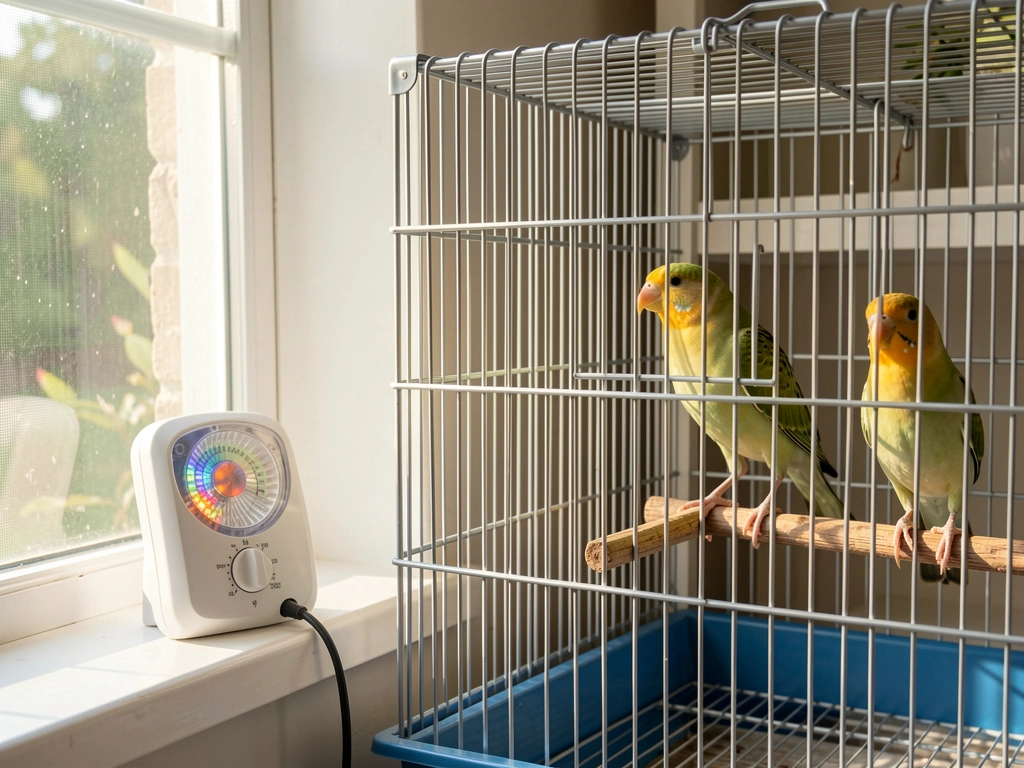
Most companion birds do best with about 10 to 12 hours of quiet, dark, uninterrupted sleep. Sleep deprivation directly compromises a bird's health and immune response, and a tired or chronically under-slept bird simply won't vocalize at normal levels. Cover the cage at the same time each night and uncover it at a consistent time in the morning. This routine signals the start of the 'active' day, which is when birds naturally vocalize most. If your household is noisy or brightly lit late into the evening, your bird is probably not getting enough rest even if you can't tell.
Natural or full-spectrum light during waking hours also matters. Birds cued by natural daylight patterns are more active and vocal. Position the cage near a window (but not in direct scorching sun) or use a full-spectrum light on a timer that mimics a natural day cycle.
Cage placement and ambient sound
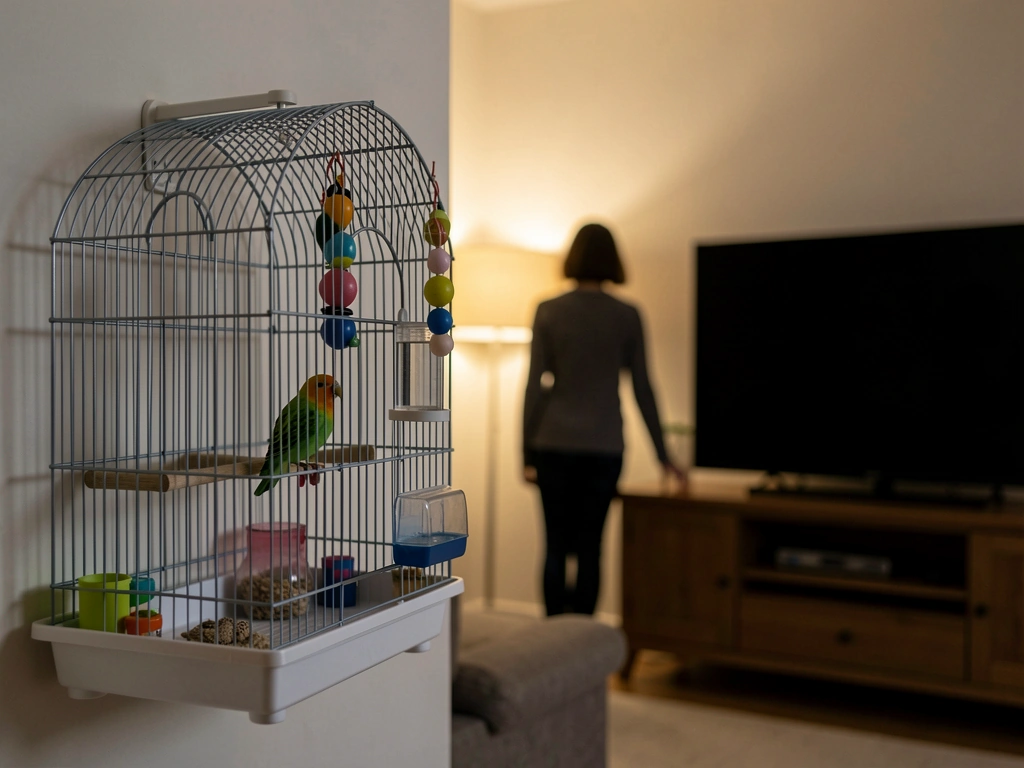
Birds are social and vocal in response to sound, so placing the cage in a quiet back room where they're isolated is counterproductive. Put them somewhere they can see and hear household activity, at a height where they feel secure, not on the floor. At the same time, avoid very loud environments like next to a blasting television, which can stress rather than stimulate.
Playing music or nature sounds at a moderate volume during the day has worked for many owners to encourage vocalizing, especially first thing in the morning. Try it and watch your bird's response. If they perk up, fluff in a relaxed way, and start making sounds, keep it going. If they flatten their feathers and go quiet, dial it back.
Consistent daily timing
Birds thrive on predictable schedules. Feed, interact, and train at the same times each day. Morning is typically the prime vocalization window, especially for canaries and most parrots. Build your interaction and enrichment time around that natural peak rather than trying to force vocalizations during periods when your bird is naturally quieter.
Hands-on training and enrichment to encourage singing
Once the environment is right, you can actively encourage and shape singing using enrichment, social interaction, and reward-based training.
Social interaction as a trigger
Birds vocalize in response to social contact. Spend time talking, whistling, or singing near your bird every day. Mirror the sounds you want them to make. If you whistle a simple tune repeatedly, many birds will start attempting it back. This works because birds learn vocally through imitation, which is exactly how they acquire sounds in the wild.
For canaries specifically, hearing recordings of other canaries singing, or having a single (non-dominant) canary companion, can stimulate more song. However, Lafeber notes that a dominant cagemate can actually make a bird's life miserable and suppress singing entirely, so be careful about adding cage companions without monitoring the dynamic closely.
Foraging and enrichment toys
A mentally stimulated bird is a vocal bird. Foraging toys, puzzle feeders, and enrichment objects give your bird cognitive engagement that reduces boredom-related silence. The Association of Avian Professionals describes foraging and puzzle enrichment as a way to provide cognitive stimulation and simulate natural foraging behavior. Hide treats in foraging toys, rotate toys regularly so they stay novel, and offer different textures, sounds, and materials. When birds are engaged and feel safe, they vocalize more naturally.
Reward-based training and marking vocalizations
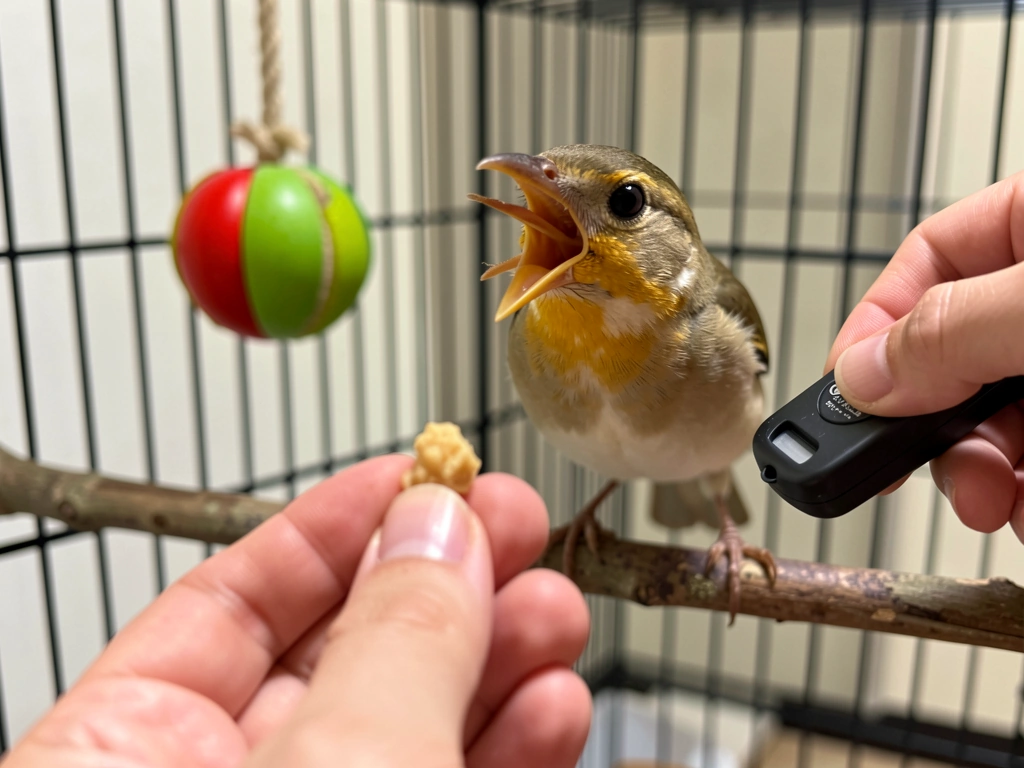
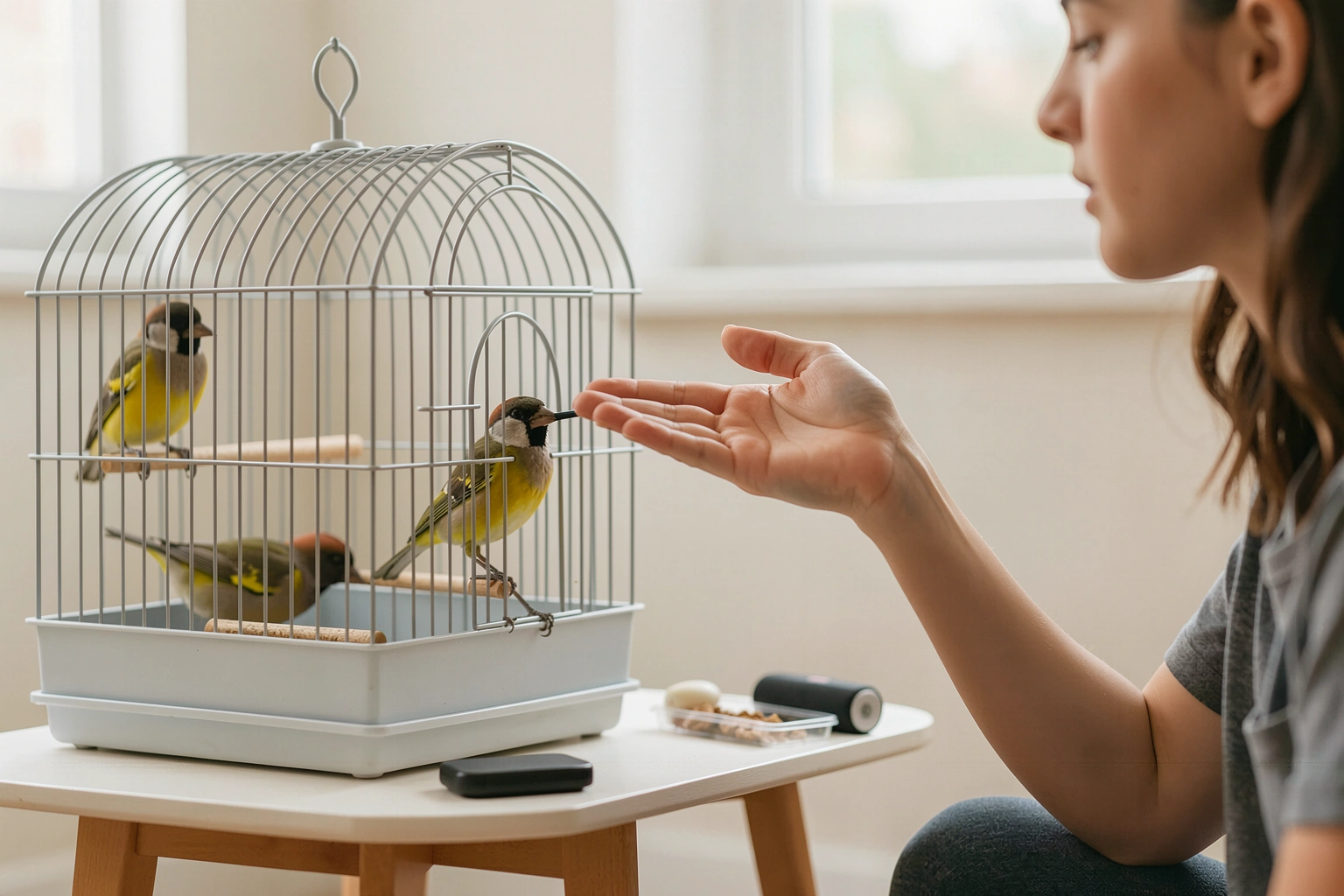
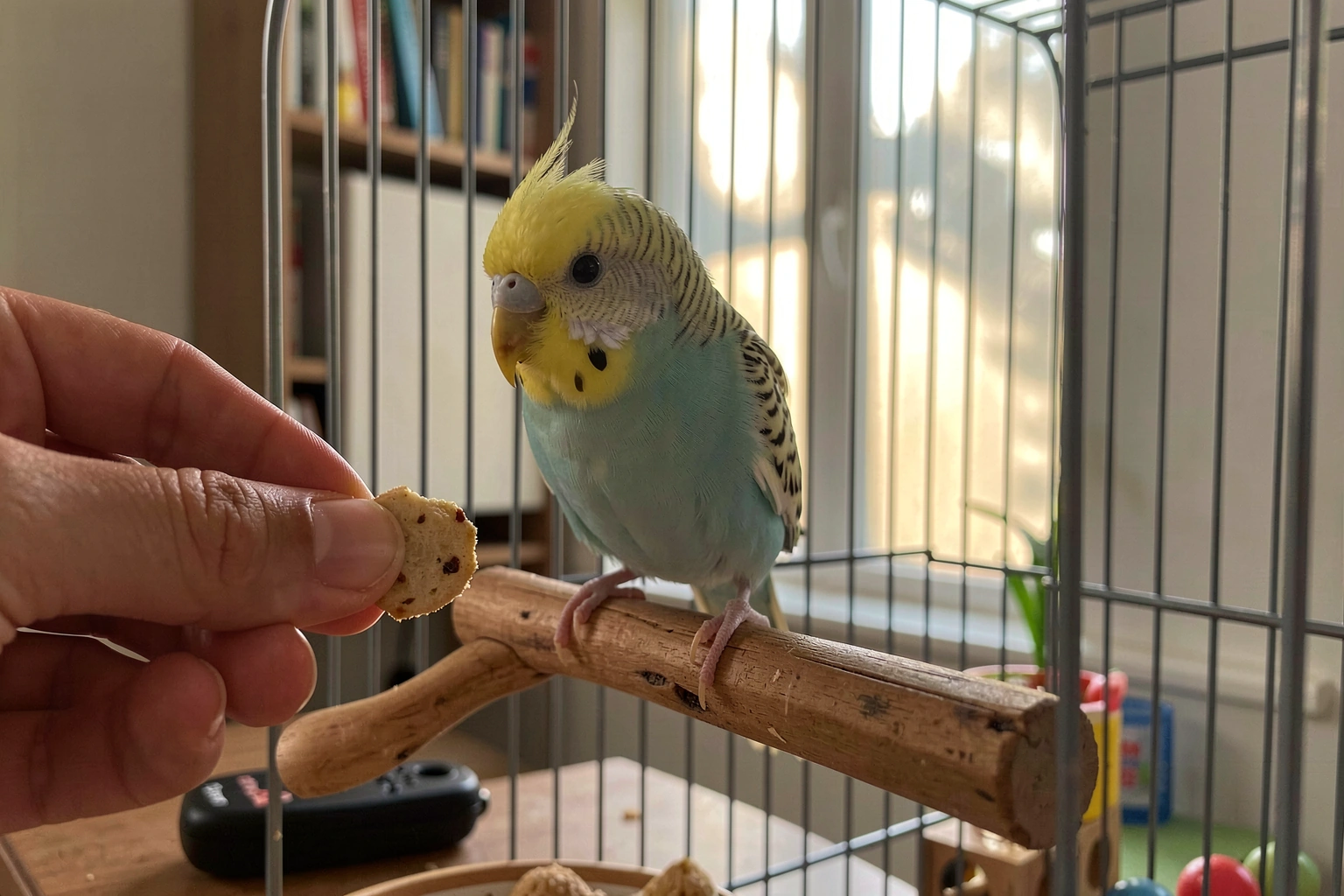
This is where you can actually shape singing into a cued behavior. The method is mark-and-reward training: the moment your bird produces the sound you want, you mark it with a consistent signal (a clicker or a short word like 'yes') and immediately follow with a highly valued food treat. The AVSAB explains that precise timing of the marker is what communicates to the animal exactly which behavior earned the reward. VCA reinforces this, noting that you should click and deliver the treat immediately so the bird can connect the marker to the rewarded behavior.
In practice, this means you wait for a natural vocalization, mark it the instant it happens, and reward. Over many repetitions, the bird learns that making that sound earns a treat. Then you can start adding a cue, a hand gesture, a word, or a whistle, before the expected vocalization so the bird learns to produce it on cue. Keep sessions short, around 5 minutes, and end on a success. The World Parrot Trust's target training guidance describes this same progression of cueing and rewarding with a 'yes' and a treat, which you can apply to vocal behaviors as well.
One practical tip: identify what treat your bird is most motivated by. For many parrots, a small piece of a favorite fruit or a nut works well. For canaries, a tiny piece of egg food or a millet spray is often highly valued. The treat needs to be genuinely exciting, not just adequate.
Manage health, stress, and causes of low vocalizing
If your bird has gone quiet or never vocalizes much, training is not always the first answer. Health problems and stress are two of the most common reasons birds stop singing, and they're often invisible until the situation is serious.
Why birds hide illness
Birds are prey animals. In the wild, showing weakness attracts predators, so they're hardwired to mask symptoms until they can't anymore. The AAV explicitly states that changes in behavior and vocalization can be meaningful signs of illness even when other symptoms are subtle. That means a bird that goes quiet, reduces singing, or stops vocalizing at its normal level should be taken seriously, not just treated as a training problem.
Signs that mean get to an avian vet
Watch for these specific warning signs. If you see any of them, contact an avian veterinarian, not a general small-animal vet.
- Fluffed feathers for prolonged periods (not just brief post-bath fluffing)
- Open-mouth breathing, labored breathing, or tail bobbing with each breath
- Discharge from the eyes, nose, or mouth
- Frequent sneezing, coughing, or gasping
- Weakness, inability to stand, or prolonged panting
- Changes in droppings (color, consistency, volume)
- Ruffled feathers combined with decreased activity or poor appetite
- Any sudden change in how much your bird vocalizes
Respiratory illness is one of the most common reasons a bird stops singing. Conditions like psittacosis can cause decreased activity, ruffled feathers, runny eyes, and nasal discharge well before they become visually obvious. LafeberVet lists open-mouth breathing, increased sternal motion, and tail bobbing as signs of respiratory difficulty. MSPCA-Angell notes that severe dyspnea, prolonged panting, and open-mouth breathing indicate an advanced state that needs emergency care immediately.
Stress, fear, and anxiety
Even a physically healthy bird can go silent from stress. Common stressors include new pets in the home, a rearranged room, a new person, loud unpredictable noise, improper handling, or being in a cage that feels exposed. If you've recently changed something in your bird's environment and they've gone quieter, that's your first clue. Roll back the change if possible, or give the bird significant time to adjust with calm, low-pressure interaction.
Boredom is also a real cause of vocal suppression. A bird with nothing to do and no stimulation often retreats into quiet. This is where the enrichment strategies above become especially important.
Use species-specific cues and progression
The same training framework applies across species, but what you're working toward and how you get there depends on the bird. Here's a practical breakdown by common pet bird type.
| Species | Natural vocal style | Best training approach | Key triggers |
|---|---|---|---|
| Canary (male) | Sustained melodic song, often morning-focused | Expose to canary song recordings; reward unprompted singing; no dominant cagemate | Morning light, social isolation (no dominant bird), good health |
| Cockatiel | Whistles, contact calls, mimicry | Whistle tunes repeatedly; mark and reward when bird whistles back; teach specific whistles on cue | Your presence, consistent morning interaction, whistling from you |
| Budgerigar | Chattering, babbling, some mimicry | Talk and play audio near bird; reward vocalizations; short daily sessions | Social contact, varied sounds, foraging enrichment |
| Amazon/African Grey/Eclectus | Broad mimicry, loud calls, context-linked speech | Pair sounds with context repeatedly; reward attempts; build a cue word for singing | Routine, social engagement, high-value treats |
| Cockatoo | Loud contact calls, some mimicry | Focus on rewarding softer vocalizations; use enrichment to reduce screaming and reward quieter singing sounds | Positive social interaction, foraging toys, calm environment |
For species like cockatiels and budgies, teaching specific whistled tunes is one of the most achievable goals. Whistle the same short melody repeatedly during your daily interactions, mark the moment your bird attempts any part of it, and reward. Build from there. If teaching your bird to whistle a specific tune on cue is your main goal, that process has its own detailed progression worth exploring separately.
For canaries, the training approach is less about cues and more about conditions. Optimize health, light, sleep, and remove any social suppressors like a dominant cage companion. A healthy, unstressed male canary in the right conditions will sing on his own. Your job is mostly to remove obstacles.
Track progress and troubleshoot common setbacks
Progress with vocal training isn't always linear. Use this troubleshooting checklist to diagnose what's going wrong and adjust your approach.
Quick troubleshooting checklist
- Is your bird getting 10 to 12 hours of dark, quiet, uninterrupted sleep every night? If not, fix this first before anything else.
- Has anything changed recently in the environment (new pet, moved cage, new person, schedule shift)? Address any obvious stressors.
- Are there any physical illness signs from the list above? If yes, contact an avian vet before continuing training.
- Is your bird eating and drinking normally? Changes in appetite are often early illness signals.
- Are your training sessions short enough (under 5 minutes) and ending on a success?
- Is your reward genuinely motivating? Try a different treat if the bird seems uninterested.
- Are you marking at the exact moment of the correct vocalization, or slightly after? Timing matters enormously.
- Is the cage placement giving enough social contact without being in an overwhelming or loud spot?
- For canaries: is there a dominant bird in or near the cage suppressing the singer?
- Have you been consistent for at least 2 to 3 weeks? Vocal behavior changes take time.
When progress stalls
If you've been consistent for several weeks, ruled out health and stress issues, and your bird still isn't vocalizing more, go back to basics. Sometimes birds go through quieter phases naturally, especially during molting or seasonal changes. Canaries in particular often stop singing during molt. If your bird is in molt (pin feathers, patchy feathers, increased feather debris), wait it out. Song typically returns when molt is complete.
If you're working with a parrot species and not seeing progress on specific sounds, consider whether you're targeting something realistic for your individual bird. Not every bird in a mimicking species will produce the same repertoire. Some individuals are simply less vocal than others, and that's normal variation, not failure. Adjust your goal to match your bird's natural tendencies rather than forcing an outcome the bird may not be built for.
The bottom line: a bird that sings is a bird that feels safe, healthy, socially connected, and mentally engaged. Get those conditions right, use reward-based training with precise timing, and be patient and consistent. That combination works for almost every species and every experience level.
FAQ
How long should I wait before I decide my bird is not responding to the singing setup or training?
Give environment changes and reward training at least 2 to 3 weeks, because birds often need repeated routine cues before vocalizing more. If your bird is suddenly quieter within a few days of a change, treat it as a possible health or stress signal first, and do not wait it out while training continues.
What is the safest way to start “mark and reward” for vocal sounds if I never know when my bird will do the right vocalization?
Start by rewarding any variation of the vocalization you want, not only the perfect version. For example, if you want whistles, reward partial attempts or closer approximations immediately, so the bird learns the general pattern rather than becoming frustrated or silent.
If my bird loves treats, should I always use food rewards when trying to increase singing?
Use food rewards for marking, but avoid overfeeding by keeping treats tiny and limiting sessions to about 5 minutes. If your bird becomes less vocal after eating frequently, switch to smaller, more frequent pinches or use lower-calorie favorites and increase non-food interaction as part of the “reward.”
Can I teach a bird to sing on cue if it mostly whistles or chatters naturally?
Yes, but only by matching the bird’s natural channel. Choose a cue and then reward the closest sound your bird already produces (contact calls, chatter, or imitations), rather than expecting a canary-style song from a species that typically communicates differently.
How do I handle it if my bird mimics sounds in the wrong tone or timing, and I want “cleaner” singing?
Refine gradually. First reward any attempt, then move the reward criteria closer to the exact rhythm or pitch you want by only marking the versions that are slightly closer. Avoid repeating the same cue over and over before the bird has a chance to perform, which can teach confusion instead of singing.
My bird is vocal at random times, how can I fit training into that without forcing silence?
Train right at the natural peak when vocalizations happen, usually morning for many species. If your bird is quieter that day, do a low-pressure “practice check” (short session, no forcing) and focus on environment and enrichment instead of demanding sounds.
Should I record my bird and play it back to encourage singing?
Playback can help for some canary situations, but it can also stress parrots if the sound makes them guard, panic, or seek the “other bird.” If you try it, start low volume and watch body language, if the bird puffs, flattens, or escalates alarm calls, stop and rely on social interaction in the home instead.
What if my bird only sings when I am in the room, and goes quiet when I leave?
This often indicates dependence on your presence for safety or stimulation. Increase independence gradually by pairing your brief departures with calm, predictable routines, and reward vocalizing that happens during your absence window. Avoid sudden long gaps early on.
Can cage placement change singing, or is it mainly about sleep and light?
Cage placement matters. If the cage is too low, hidden, or positioned where the bird feels exposed, vocalizing can drop even with perfect sleep. Aim for a secure height where the bird can observe household activity without being in direct blasts of noise or foot traffic.
What should I do if my bird suddenly stops singing but otherwise seems “normal”?
Treat it as urgent enough to evaluate, even if symptoms are subtle. Prey animals mask illness, so a sudden drop in normal vocalization should prompt a quick avian vet check, especially if there were recent diet changes, temperature swings, new cleaning chemicals, or smoke exposure.
Are there common “hidden” stressors that owners overlook when trying to make birds sing more?
Yes, recurring ones include new fragrances or aerosols, ceiling fans, rearranged furniture that alters the bird’s sightlines, and handling at inconsistent times. Also note people arriving unpredictably or loud devices turning on at night, both can disrupt the quiet sleep window that supports vocalizing.
My bird is molting, should I stop all singing training during that time?
Reduce expectations and keep sessions very short. You can keep doing gentle mark-and-reward for any natural vocal attempt, but avoid demanding specific whistles. Once feather growth slows and the bird’s energy and posture normalize, you can rebuild your cueing step-by-step.
What if the bird is vocal, but not the sound I wanted, how do I decide whether to change training goals?
Adjust the goal to what the bird actually can and wants to produce. For mimicking species, individual repertoires vary widely, so if months of cueing produce only a limited subset, shift toward shaping the closest consistent sounds rather than pursuing an unrealistic target.
Next Article
How to Teach a Bird to Sing: Step-by-Step Training
Step-by-step guide to teach a bird to sing with setup, sound cues, daily practice, reinforcement, troubleshooting, and t